
Golf Apparel Sizing: Find Your Perfect Fit
A great round can be derailed by surprisingly small things: a collar that feels too tight over the ball, trousers that pull when you crouch to read a putt, or a jacket that turns every swing into a wrestle. Golf apparel sizing is not about chasing the number on the label. It is about finding a fit that looks sharp, feels easy and gives you room to play your own game.
Modern golfwear should move with you from the first tee to the nineteenth. That means choosing enough space for rotation and layering, without losing the clean, confident shape that makes an outfit stand out for the right reasons.
Golf apparel sizing starts with how you play
There is no single “right” fit for every golfer. A player who likes a fitted polo under a lightweight gilet will shop differently from someone who layers a hoodie and windbreaker through a chilly morning medal. Your preferred silhouette matters, but mobility matters more.
Start by deciding where you sit on the fit spectrum. A regular fit gives you dependable room through the chest, waist and arms. It suits golfers who prefer a classic shape, wear base layers, or simply do not want fabric sitting close to the body. A slim fit creates a cleaner, more tailored line. It can look brilliant, especially with patterned polos or monochrome separates, but it should never feel restrictive across the shoulders.
The easiest test is practical. Stand tall, reach both arms overhead, rotate as if you are making a full backswing, then sit into your golf posture. If the fabric catches across your upper back, rides up at the waist or tightens around the thighs, go up a size or try a roomier cut. Looking good is the point. Feeling held back is not.
Measure once, shop with more confidence
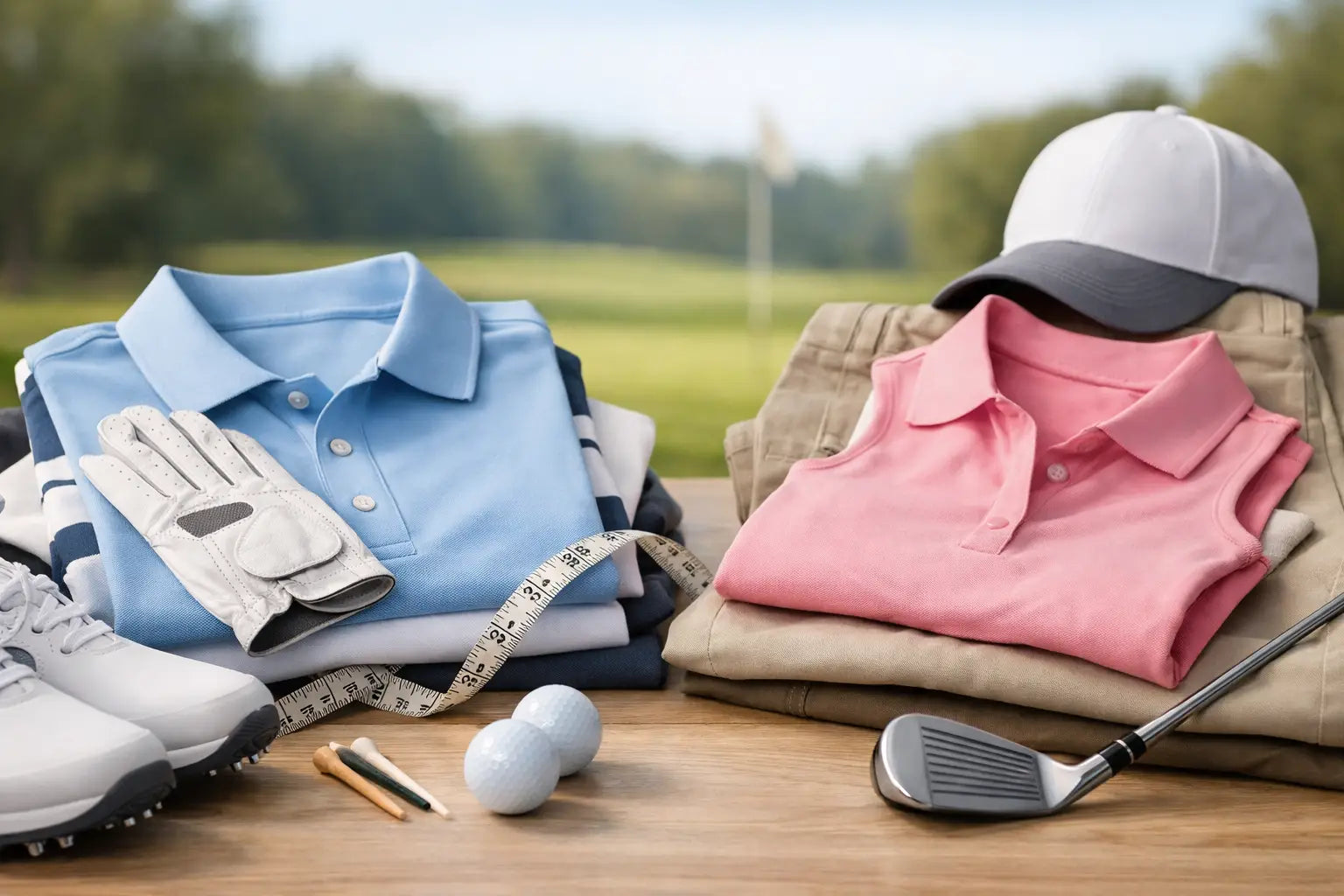
A soft tape measure takes the guesswork out of online sizing. Measure over light clothing, keep the tape level and avoid pulling it tight. Compare your measurements with the size guide on the individual product page, rather than assuming every polo, jacket and trouser will fit identically.
For tops, take your chest measurement around the fullest part of the chest. If you are between sizes, think about how you will wear the piece. Choose the smaller size for a closer, standalone fit, or the larger size if it will sit over a polo, base layer or mid-layer.
For trousers, joggers and shorts, measure your natural waist where the waistband will sit. A well-fitting golf trouser should stay secure without digging in when you bend, walk or take a full turn through the ball. If you regularly carry tees, gloves, scorecards and a phone, pockets also need enough room to work without pulling the garment out of shape.
Sleeve and leg length deserve attention too. A polo sleeve should sit comfortably around the mid-bicep without gripping. Quarter zips and jackets need sleeves that still cover the wrist at the top of your swing. For trousers, aim for a clean break near the shoe rather than excess fabric bunching over it. Joggers can finish more neatly at the ankle, provided the cuff does not feel tight.
Do not rely on your usual size alone
You may wear one size in a high-street T-shirt and another in performance golfwear. That is normal. Fabric composition, cut and intended use all change the final fit. A stretch performance polo may feel generous through the chest, while a structured windbreaker can feel closer because it is designed to shield against the elements.
The label is a starting point. The measurements and product fit notes are the smarter call.
Get the fit right for each golf layer
Golf outfits work best as a system. Each layer needs a job, and each job affects sizing.
Polos: clean through the body, free at the shoulders
Your polo should sit neatly across the shoulders, with the shoulder seam close to the edge of your shoulder rather than dropping down the upper arm. The placket should lie flat, and there should be enough ease through the torso to prevent the hem riding up during your swing.
A slightly closer fit can make bold prints and colour-block designs look especially crisp. If you favour a more relaxed look, size for your chest and let the body fall naturally. Avoid a polo that is overly long or baggy - it can look untidy when tucked in and create unnecessary fabric around the waist.
Hoodies and quarter zips: leave room to layer
A golf hoodie should feel athletic, not bulky. You need space for a polo beneath it, plus enough stretch through the upper back to rotate freely. The right fit sits comfortably at the shoulders and cuffs without becoming loose around the chest.
Quarter zips are often worn as a mid-layer, so consider what is going underneath. If you usually play in only a polo and want a streamlined finish, your normal size may be right. If you wear a thermal base layer or prefer a little extra room, sizing up can be the better move. Check that the collar is comfortable when zipped, particularly if you play in colder conditions.
Gilets and windbreakers: protect without crowding your swing
A gilet should give warmth through the core while leaving your arms completely unrestricted. It needs enough room for a polo or knit layer, but not so much that it balloons in the wind. Look for a close-but-comfortable fit through the chest and torso.
With windbreaker jackets, shoulder movement is the deciding factor. Outerwear naturally has a more structured feel than a lightweight polo, so test your range of motion before removing the tags. A jacket that feels fine standing still can become distracting halfway through a drive.
Trousers, joggers and shorts: build from the waist and seat
The best golf bottoms are secure at the waist, comfortable through the seat and unrestricted at the thigh. If you are in between waist sizes, the answer depends on the waistband construction. Stretch waistbands and drawcord joggers can offer more flexibility. Tailored trousers with a fixed waistband require a more precise choice.
Do not size down in the hope of a sharper silhouette. Tightness across the hips and thighs shows up quickly when you walk 18 holes, climb in and out of bunkers, or crouch over a tricky three-footer. A modern tapered leg gives definition without needing to feel restrictive.
Women’s and junior golfwear: fit for movement, not a compromise
Women’s golf apparel should be chosen around bust, waist and hip measurements, with movement through the shoulders and torso taking priority. A fitted dress, skort or polo can look polished, but it should still allow you to turn and bend without tugging at seams or riding up. If your bust and hip measurements point to different sizes, choose the size that fits the fuller area, then assess whether the design has adjustable details or stretch to refine the fit.
For juniors, leave sensible growing room without going oversized. Sleeves that cover the hands and trouser hems that drag near the heel are not practical on the course. Performance fabrics with stretch are especially useful here, allowing young players to move freely while keeping a smart shape.
The fabric changes the feel
Two garments with the same measurements can feel very different. Stretch fabrics offer more forgiveness and are ideal for a close, active fit. Lightweight technical materials may feel airy and relaxed, while lined outerwear can feel more compact even when the stated size is unchanged.
Think about the season before making your choice. In summer, a breathable polo with a clean fit keeps the look fresh without adding bulk. In autumn and winter, allow room for layers. A close-fitting base layer beneath a polo, quarter zip and gilet is more effective than buying every piece oversized.
At Caddie Couture, the strongest outfits balance performance with presence: a fit that lets you swing hard, walk comfortably and wear the design with confidence.
A final fit check before you commit
Try new golfwear on with the pieces you would genuinely wear together, not just with whatever is nearest. Tuck in the polo if that is how you play. Put on your usual belt. Wear golf shoes when checking trouser length. Then make a few practice movements in front of the mirror.
You are looking for ease, not excess. The best fit will not demand your attention once you are standing over the ball. It simply gives you the freedom to move, the confidence to look the part and one less excuse when the tee shot finds the rough.