

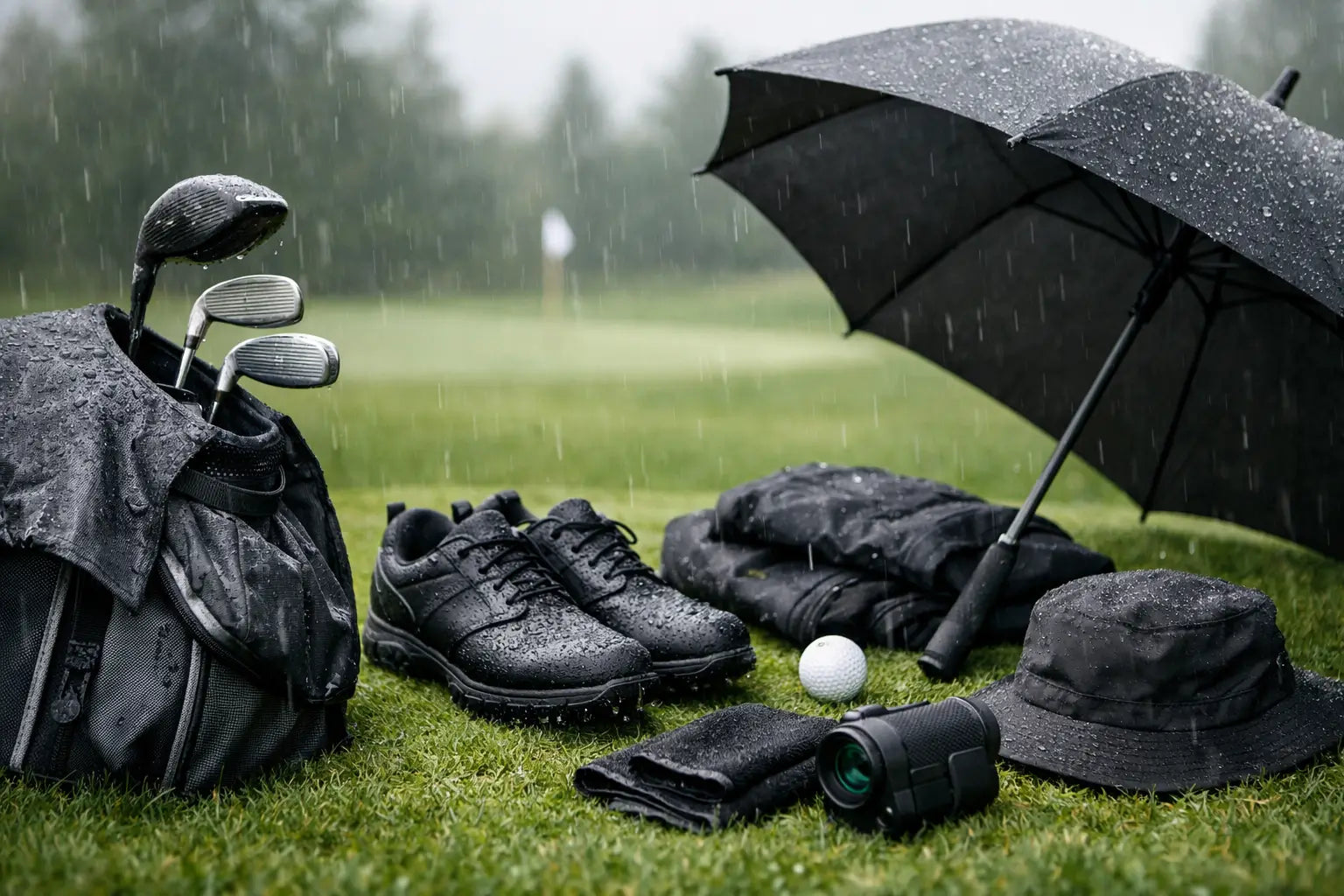
Rainy Day Golf Essentials That Keep You Playing
The forecast says showers. Your tee time says play on. That is where the right rainy day golf essentials earn their place in the bag. A wet round does not need to mean soaked sleeves, slipping hands and a scorecard full of rushed swings. Get your layers, grip and bag set-up right, and you can stay comfortable, composed and properly sharp when everyone else is watching the clouds.
Rainy Day Golf Essentials Start With Your Outer Layer
The jacket is the difference-maker. A good golf windbreaker or waterproof layer needs to block rain and wind without feeling like a stiff shell that fights your swing. Look for a fit that gives your shoulders room to rotate, a collar that sits comfortably when zipped, and a lightweight construction you can keep in the bag without sacrificing half your storage.
There is a trade-off here. The most protective waterproof jackets can feel warmer and more structured, which is ideal for a cold, windy winter medal. For a mild summer shower, a lighter windbreaker may be the better play. It takes the edge off the breeze, sheds passing rain and keeps you from overheating by the fifth hole.
Style still counts when the weather turns. Grey skies are no reason to disappear into a shapeless black shell. A clean monochrome layer makes a minimal look feel deliberate, while a statement print or a brighter colour can bring proper presence to a flat-looking fairway. Caddie Couture was built for golfers who want performance gear with a point of view, not another forgettable layer.
Build a Layering System, Not a Pile of Clothes
A rain jacket performs better when what sits underneath makes sense. Start with a breathable performance polo that moves moisture away from the skin. Add a quarter zip or golf hoodie when the temperature drops, then finish with your outer layer. Each piece should work independently, because a damp morning can turn into a humid afternoon surprisingly quickly.
Avoid heavy cotton where you can. Once it gets wet, it stays wet, feels cold and adds unwanted weight. Technical fabrics are the smarter option for an active round, especially if you are carrying your bag or walking a hilly course. The goal is simple: warm enough on the tee, cool enough on the walk, unrestricted over the ball.
Your lower half deserves the same attention. Water-resistant trousers or joggers are a strong call for persistent rain, particularly when the ground is already saturated. If the forecast is mixed, choose a pair that is comfortable enough to wear all day rather than something so thick and noisy you cannot wait to take it off in the clubhouse.
Keep Your Hands Dry and Your Grip Reliable
Rain changes your relationship with the club. A grip that feels secure in dry conditions can become slick after one shower, and a wet glove loses confidence fast. Pack at least two gloves and rotate them. One can dry while you use the other, which is far better than trying to play eighteen holes in one drenched glove.
Rain gloves are worth considering for genuinely wet days. They are designed to become grippier when damp, although some golfers prefer the feel of a standard glove in light rain. If you do go with your usual glove, keep it protected between shots rather than leaving it clipped to the outside of the bag.
A proper golf towel is non-negotiable. Ideally, carry two: one dedicated to drying grips and hands, the other for clubs, ball and shoes. Keep the grip towel under your umbrella or tucked inside a dry bag. If it gets saturated, it cannot do its job. This small detail prevents the kind of rushed, tentative swing that costs shots all afternoon.
Dry your grips before every full shot. It sounds obvious, but it is easy to skip when the rain is coming sideways and your playing partners are ready to move. Take the extra ten seconds. A secure hold lets you swing with commitment instead of steering the ball down the fairway.
Protect the Things That Make a Round Work
Your bag needs a rain plan, not just a rain hood you remember after your scorecard has dissolved. Put your phone, rangefinder, wallet and spare gloves in a waterproof pouch or resealable bag before the round starts. Electronics are expensive; a few seconds of preparation is cheaper than a wet-pocket disaster.
Use the bag cover whenever rain is more than a brief passing shower. Keep the zip openings facing away from the wind where possible, and do not leave every pocket open while you search for a tee. If you use a trolley, an umbrella holder can be genuinely useful, though it depends on the wind. In strong gusts, a large umbrella can become more distraction than protection.
Bring a few extra scorecards and a pencil rather than relying on a pen. Pencils work in wet conditions, and an extra card gives you a back-up if the first one becomes unreadable. A small towel or cloth for your putter grip is another understated winner. Wet hands on a short putt are not the kind of test anyone needs.
Shoes, Socks and the Ground Game
Soft, waterlogged turf asks more of your footwear. Waterproof golf shoes with a secure outsole help you stay stable through the swing, especially on sloping lies and muddy walkways. Spikeless shoes can work well in light rain, but if the course is properly wet or hilly, more aggressive traction is usually the safer choice.
Socks matter more than most golfers admit. Pack a dry spare pair in a sealed bag. If you step into a puddle on the second hole, changing them at the turn can transform the rest of the round. Damp feet are uncomfortable, cold and distracting, and no one plays their best while thinking about squelching shoes.
Do not forget the cap. A waterproof cap or a classic golf cap under an umbrella helps keep rain out of your eyes and makes it easier to read putts, follow ball flight and focus at address. It is a small piece of kit with an outsized effect on concentration.
Adjust Your Golf, Not Just Your Wardrobe
The best rainy day golf essentials support smarter decisions. Wet fairways offer less run, so accept that the course will play longer. Greens may be slower, but water can also make downhill putts deceptively quick if there is surface water. Watch how the ball reacts in the first few holes, then adjust rather than forcing your usual numbers.
Take one extra club when the air is cold and heavy. Keep your tempo smooth. Trying to muscle a shot through wet conditions usually creates poor contact and more spray from a muddy lie. A controlled swing, a clean grip and a realistic target are the better recipe.
Course etiquette matters too. Repair pitch marks, rake where required and keep up with the group in front without sprinting through every routine. Rainy rounds can be slower, but they do not have to feel chaotic. Be ready before it is your turn, keep essential gear to hand and give your playing partners room to manage their own weather set-up.
A Quick Bag Check Before You Leave
Before heading to the course, make sure you have a waterproof outer layer, two gloves, separate towels for grips and clubs, a bag cover, waterproof storage for valuables, a cap, and spare socks. Add an umbrella if the wind allows it. That is not overpacking. It is turning a questionable forecast into a round you can actually enjoy.
Rain has a way of stripping golf back to the useful stuff: balance, patience, clean contact and a bit of grit. Turn up prepared, wear something that moves as well as it looks, and let the fair-weather golfers race for the car park. The course is still there. So is your game.