
Guide to Golf Layering Pieces That Perform
One hole you are peeling off a layer in bright sun. Three holes later, the wind cuts across the fairway and you wish you had packed another. That is exactly why a smart guide to golf layering pieces matters. In the UK especially, getting dressed for a round is less about one big jacket and more about building a kit that can handle shifting temperature, light drizzle and a breeze that turns up out of nowhere.
The best layering does two jobs at once. It keeps you comfortable enough to stay focused over 18 holes, and it keeps your look sharp from first tee to clubhouse. If your golf wardrobe leans modern rather than old-school, that balance matters even more. You want pieces that perform, but you also want an outfit that looks intentional rather than thrown together in a panic before your tee time.
Why golf layering is different
Layering for golf is not the same as layering for a walk, a run or a day in town. The swing changes everything. Bulk across the shoulders, stiff sleeves and heavy fabrics can all get in the way. A layer might feel warm on the range, then feel restrictive the moment you have to turn properly through impact.
That is why every piece has to earn its place. Good golf layers trap enough warmth without adding too much weight. They move cleanly through the arms and chest. They sit neatly over a polo or base layer without bunching. Most of all, they adapt. Golf is a sport of small margins, and if you are fiddling with your cuffs or overheating on the back nine, your clothing is no longer helping.
There is a style angle too. Traditional golf layering can drift into safe, forgettable territory very quickly. The smarter move is choosing pieces with a clean silhouette, strong fit and enough character to give the whole outfit some edge.
The core guide to golf layering pieces
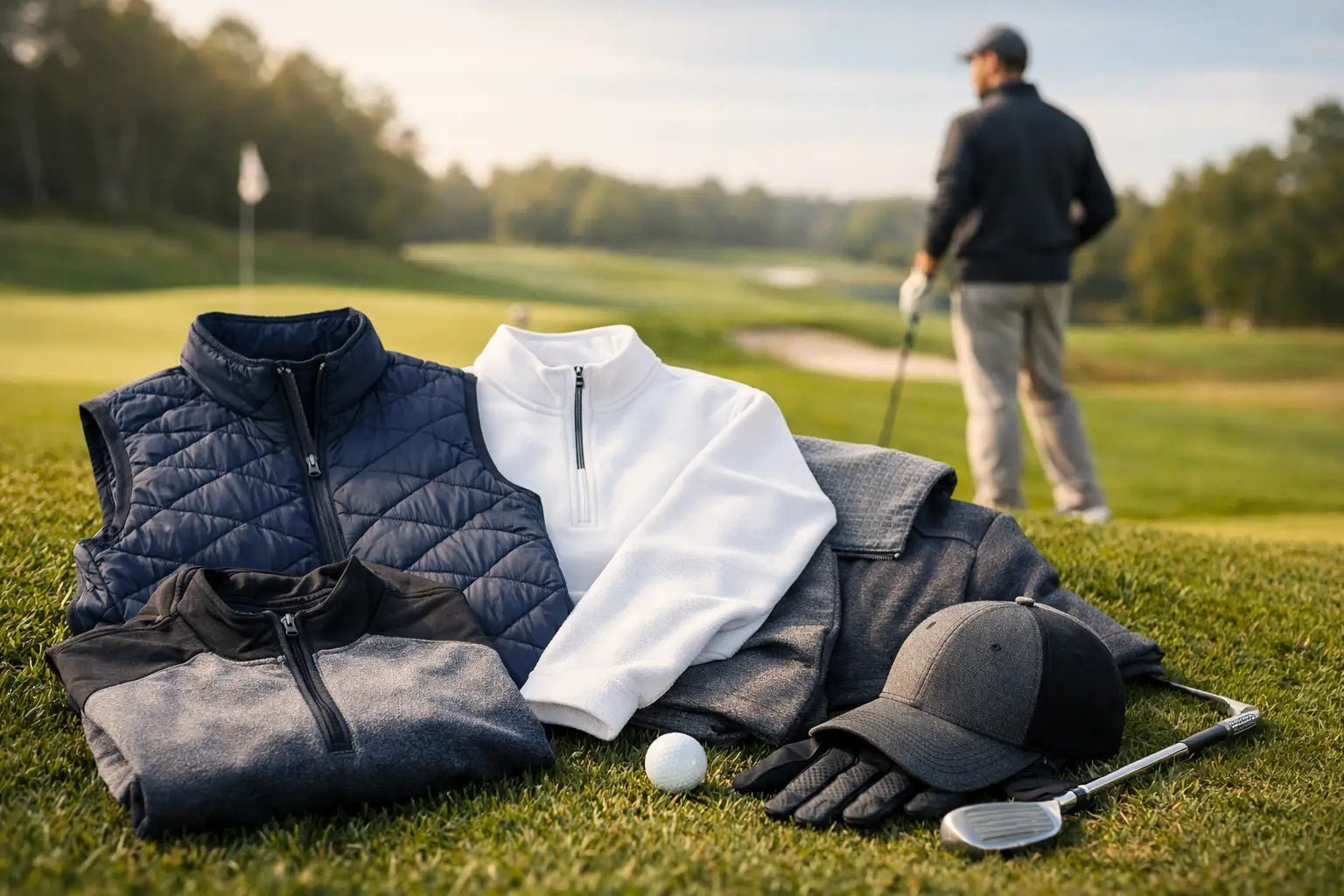
If you want a wardrobe that works across spring mornings, autumn afternoons and those unreliable summer rounds, focus on a few key categories instead of buying random extras. Each one plays a different role.
The base layer
This is the piece people either get very right or very wrong. A proper base layer should sit close to the body and manage moisture, not squeeze the life out of you or feel like gym kit borrowed for the course. On colder days, it helps hold warmth close without forcing you into thick outerwear. On milder days, it can be enough under a polo or quarter zip.
The fit is crucial. Too tight and it becomes distracting. Too loose and it loses the point. Look for stretch, breathability and a smooth feel under the rest of your outfit. A base layer is not there to be the star, but it sets up everything else.
The performance polo
A polo is often the visual anchor of the outfit, even when partly covered. It should layer cleanly under knitwear, hoodies, gilets and outerwear without the collar collapsing or the fabric clinging awkwardly. Lightweight technical polos tend to work best because they dry quickly and do not create unnecessary bulk.
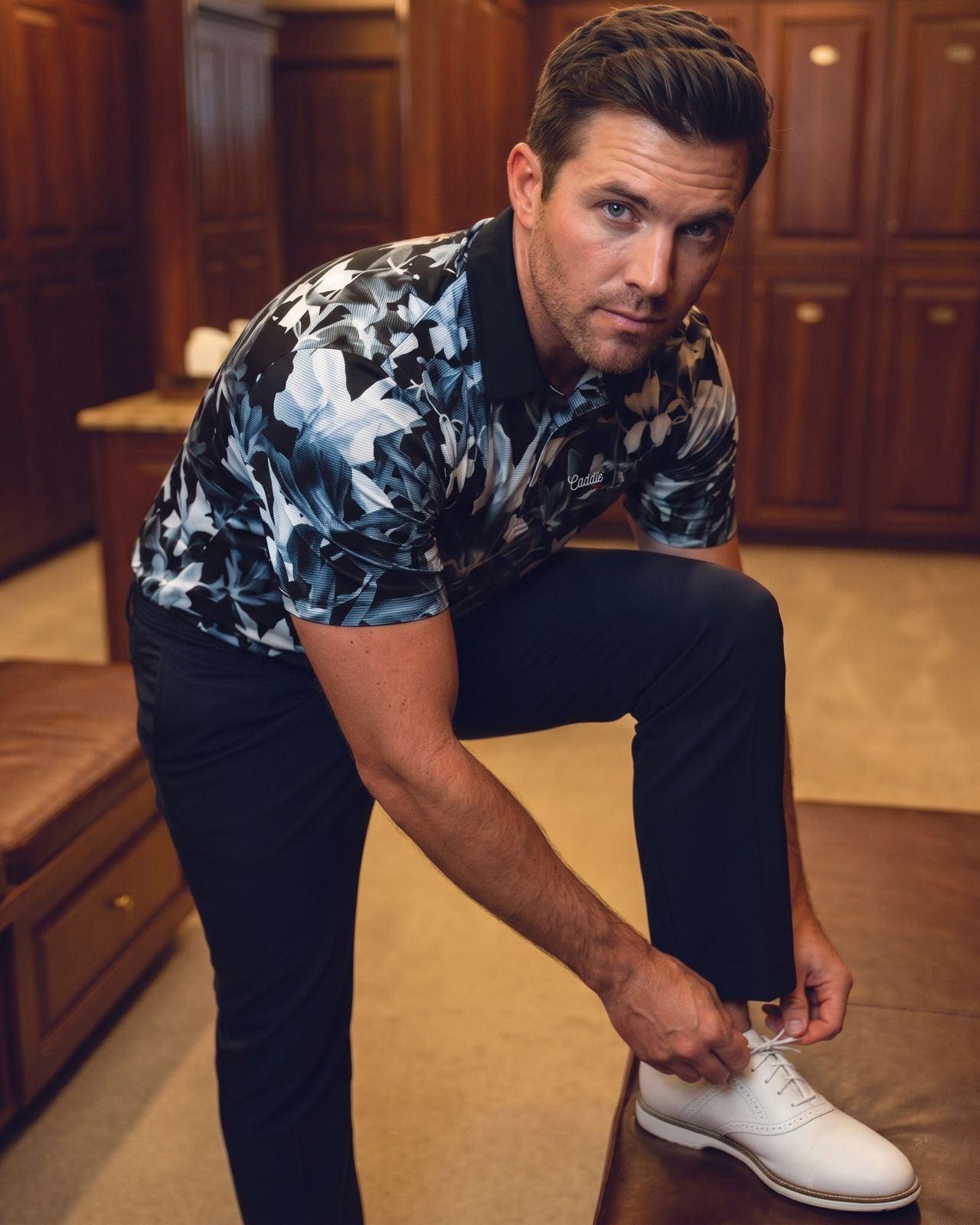
This is also where style starts to show. Monochrome looks clean and easy to pair, while bolder prints and pattern-led designs can bring energy to muted outer layers. If the rest of your outfit is simple, the polo can do more. If your outer layer has a stronger look, keep the polo balanced.
The quarter zip
This is the most versatile layer in modern golf. A good quarter zip gives you instant temperature control, enough warmth for cool starts, and a polished shape that still feels athletic. It works over a polo, under a jacket, and tied around the waist or packed in the bag when the day warms up.
Not every quarter zip is equal, though. Some are ideal for still mornings but too warm once you are walking properly. Others are so thin they only really function as styling. The sweet spot is lightweight warmth with stretch through the upper body. You want a layer that looks clean but never feels stiff.
The golf hoodie
The hoodie has earned its place on the course. Done right, it brings a current sportswear feel without sacrificing performance. It is a strong choice for golfers who want a less formal look than a quarter zip but still need coverage in cooler conditions.
The trade-off is weight and layering order. A hoodie is usually bulkier than a zip layer, so it works best as the main warm piece rather than something stuffed under a jacket. It also depends on the weather. In dry, cool conditions, it can be perfect. In persistent wind or drizzle, you may want a more protective top layer over it.
The gilet
A gilet is one of the smartest pieces in any guide to golf layering pieces because it solves a specific problem brilliantly. It keeps your core warm while leaving the arms free. That matters if you hate the feeling of full sleeves during the swing or if you run warm once you start walking.
Gilets are especially useful in those in-between conditions where a jacket feels like too much and a mid layer feels like too little. They also add structure to an outfit. Over a long-sleeve top or quarter zip, a well-cut gilet looks sharp without trying too hard.
The windbreaker or lightweight jacket
This is your shield layer. When the breeze picks up or the forecast looks unsettled, a lightweight jacket gives you protection without dragging the whole outfit down. For golf, lighter is usually better. Heavy rain jackets have their place, but for everyday rounds, a streamlined windbreaker is often the more wearable option.
The key here is noise, stretch and packability. If a jacket rustles every time you move or feels rigid at the top of your backswing, it will spend more time in the bag than on your body. A good outer layer should disappear once it is on.
How to build an outfit that actually works
Start with the conditions, not the wardrobe. A crisp but dry morning calls for something different from a damp afternoon with steady wind. The mistake many golfers make is dressing for the first ten minutes, not the full round.
For cool but manageable weather, a polo with a quarter zip is the easy win. It is clean, flexible and easy to adjust. If there is more bite in the air, add a gilet instead of jumping straight to a thick jacket. You keep warmth where it matters without losing mobility.
If the forecast looks mixed, think in removable layers. A breathable base layer, polo and lightweight outer shell gives you options. Peel one off if the sun arrives. Put it back on when the course opens up and the wind starts moving.
For colder winter golf, the answer is not piling on as much as possible. It is choosing thinner, technical pieces that work together. A base layer under a polo, topped with a stretch quarter zip and finished with a protective jacket will usually feel better than one chunky top half.
Fit matters more than people think
The right fabric can still fail if the fit is wrong. Layering pieces should skim the body, not drown it. If every layer is cut too generously, the whole outfit starts to feel heavy and untidy. If everything is ultra-fitted, movement suffers and comfort drops.
Think in levels. Your closest layer should be the most fitted. Mid layers need enough room to sit over that base without pulling. Outer layers need a little extra space, but not so much that they flap about when the wind gets up.
This is where modern golfwear stands apart. Strong layering is not just practical. It creates a cleaner silhouette. That means your look stays composed, even in changeable conditions.
Style and performance should work together
There is no reason to separate function from presence. Golf clothing can keep you warm and still make an impact. In fact, the best outfits do both. A sharp monochrome base with one standout layer can look precise and confident. A bold polo under a cleaner outer layer adds personality without becoming loud for the sake of it.
If your style leans more expressive, use layering to control the balance. Let one piece carry the statement and keep the rest refined. If your taste is cleaner, focus on texture, shape and fit instead of relying on plain basics alone.
That is where brands like Caddie Couture have shifted the conversation. Golf layering no longer has to mean blending in. You can dress for the conditions and still bring some attitude to the fairway.
What to avoid
The usual mistakes are easy to spot. Cotton-heavy layers hold moisture and start to feel cold once the temperature drops. Oversized sweatshirts can look casual off-course but often feel clumsy during a round. Thick jackets promise warmth, then make every swing feel cramped.
There is also the issue of overpacking. More options are not always better if none of them work together. A smaller rotation of versatile pieces will outperform a wardrobe full of one-note extras.
The best test is simple. If a layer makes you more aware of what you are wearing than where you are aiming, it is probably not right for golf.
Layering well is really about confidence. Confidence that you can handle the weather, move freely and still look like yourself on the course. Get the core pieces right, and the rest of your wardrobe starts working harder with less effort. When conditions change, your outfit should not be the thing that knocks you off your game.