

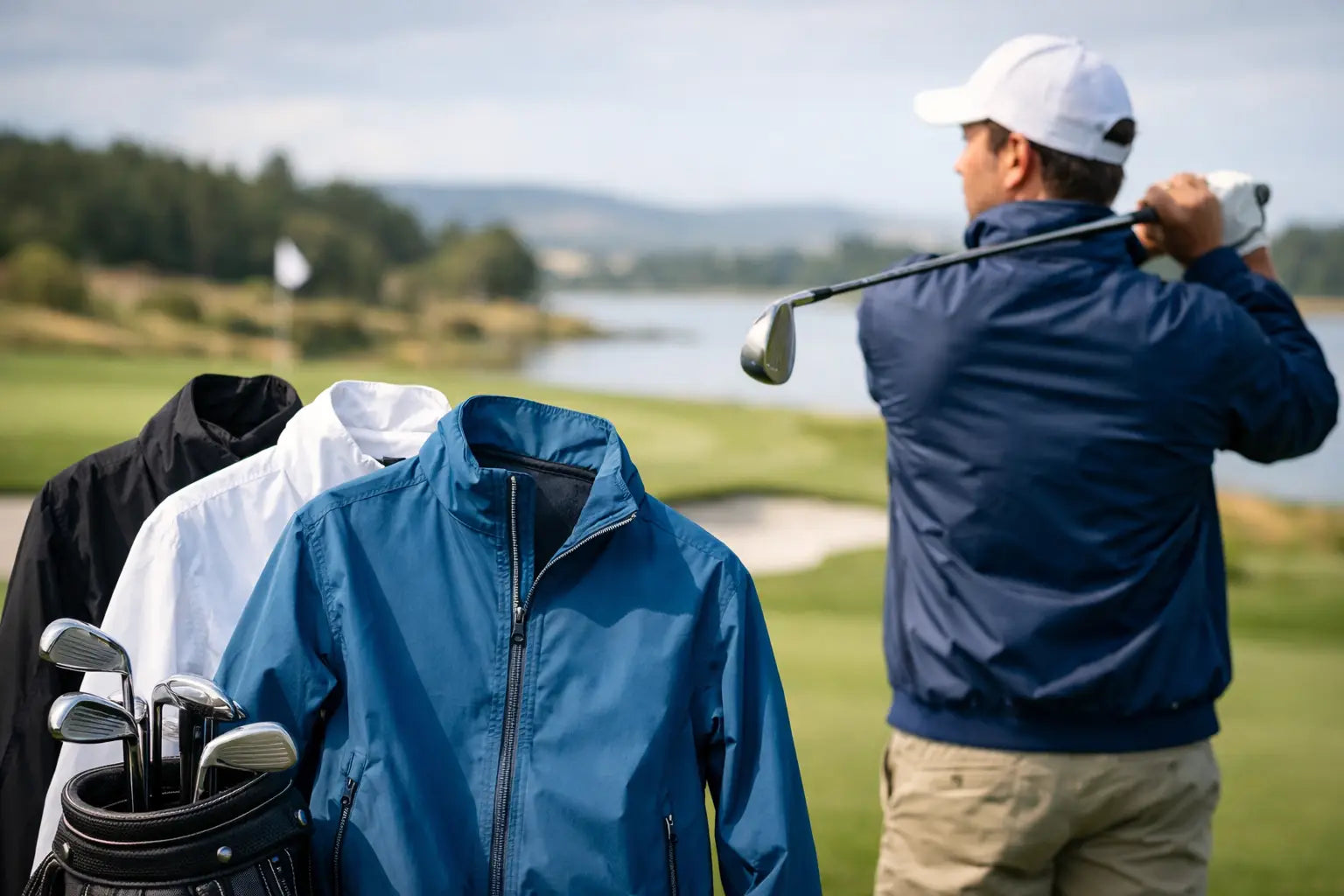
Best Golf Windbreakers for Style and Swing
A steady breeze is one thing. A crosswind cutting across the 12th while your outer layer grabs at your shoulders is another entirely. The best golf windbreakers keep the chill out without turning a committed swing into a fight with your jacket. Better still, they look like part of the outfit, not an emergency item pulled from the bottom of the bag.
For British golf, a windbreaker earns its place quickly. Early tee times, exposed links, spring evenings and those changeable days where the sun appears for five minutes all call for a layer that is light, mobile and ready when the weather shifts. The right one brings performance and presence to every fairway.
What makes the best golf windbreakers?
A proper golf windbreaker needs to do more than block a gust. It should move naturally through the takeaway, stay comfortable when you walk 18 holes and pack down easily when the clouds clear. Heavy, stiff outerwear may offer more protection, but it can feel restrictive and overheat quickly. A windbreaker sits in the sweet spot: a technical shell built for movement.
Start with the fabric. Look for a lightweight, tightly woven material that cuts wind without feeling plasticky or noisy. The best options have enough stretch across the back and shoulders to let you rotate freely. That stretch matters more than a relaxed-looking fit. If the fabric pulls between your shoulder blades at the top of the backswing, it will distract you all round.
Breathability matters just as much. Walking hilly courses builds heat, even on a cool day, and a jacket that traps it can leave you clammy by the turn. Ventilated panels, breathable fabrics and a lighter construction help regulate temperature without sacrificing coverage from the breeze.
Water resistance is useful, but be clear about what you need. A shower-resistant windbreaker handles mist, drizzle and the odd passing shower brilliantly. For sustained rain, a dedicated waterproof jacket is the smarter choice. Expecting one lightweight layer to cover every weather condition usually means compromising on either movement or protection.
Fit first, then make it a statement
Golf outerwear should look clean at address and feel invisible during the swing. That means choosing a fit that follows the body without clinging to it. Too loose and excess fabric catches the wind, bunches under your arms and creates a baggy silhouette. Too tight and you lose freedom where it counts: the shoulders, chest and upper back.
Pay attention to sleeve length. Cuffs should sit comfortably at the wrist without riding up as you extend through impact. Elasticated or adjustable cuffs are a strong detail because they stop cold air travelling up the sleeve, while a lightly shaped hem helps the jacket stay put rather than creeping upwards on every swing.
Layering changes the calculation. If you usually wear a polo alone beneath your windbreaker, a streamlined fit will feel sharp and athletic. If you want room for a quarter zip on cold mornings, allow a little extra space through the torso and arms. Try it over the layers you actually wear to the course, not just over a T-shirt in a warm bedroom.
Then there is the part traditional golf clothing often forgets: style. A windbreaker takes up a lot of visual real estate. It can either flatten an outfit or finish it. Clean monochrome designs offer a minimal look with maximum impact, while bold patterns and confident colour blocking give a simple polo-and-trouser combination real energy. Caddie Couture is built around that idea - technical pieces should perform hard and still look like you chose them on purpose.
The details that matter on a blustery round
The best golf windbreakers earn their value in small decisions. A high collar protects the neck when the wind gets up, but it should not feel bulky when zipped all the way. A zip guard at the chin is a welcome touch, particularly when temperatures drop. Full zips are the most versatile option because they are easy to put on, remove and vent between shots.
Pockets are useful, but placement is everything. Side pockets should be discreet enough not to interfere with the swing or add unnecessary bulk. Secure zip pockets can be handy for a scorecard, tee bag or mobile phone while travelling to and from the club, though most players will still keep valuables in their golf bag during play.
A hood is more divisive. It can give a windbreaker a modern, off-course feel and provides extra cover when the weather changes. On the course, though, some golfers find it catches the wind or feels distracting around the neck. If you wear a cap or play regularly in exposed conditions, a hoodless design may be the cleaner, more focused choice.
Packability is another feature worth considering. A lightweight windbreaker that folds neatly into your bag is far more likely to come with you. The jacket you leave in the car cannot help when the temperature suddenly drops on the back nine.
Choose for the course you actually play
There is no single perfect jacket for every golfer. Your regular course and playing habits should lead the decision.
For links golf, wind protection is the priority. Look for a close-fitting collar, secure cuffs and a shell fabric that holds its shape in stronger gusts. You may not need a heavily insulated layer, because too much warmth can become uncomfortable once you start walking, but you do need protection that does not flap about in coastal conditions.
For parkland courses, versatility tends to win. A light, breathable windbreaker that handles a cool breeze and a brief shower will cover most of the season. If your golf starts early and ends around lunchtime, choose something easy to layer over a polo or a lightweight mid-layer.
For society days and golf weekends, style carries more weight. You still want stretch and wind resistance, but a standout jacket can set the tone before the first tee. Pair a patterned windbreaker with neutral trousers or shorts to keep the look intentional. If the jacket makes the statement, let the rest of the outfit give it room.
How to wear a golf windbreaker without losing the look
A windbreaker works best when it feels integrated rather than added as an afterthought. Start with a performance polo that sits neatly underneath. A structured collar keeps the outfit looking course-ready if you wear the jacket open, while a close-fitting base layer keeps the silhouette clean when zipped up.
With bold jackets, keep the lower half simple. Black, navy, stone or white trousers create balance and make the outer layer the focal point. With a black or neutral windbreaker, you have more freedom to introduce colour through the polo, cap or gloves. The result should feel confident, not crowded.
Do not overlook proportions. A lightweight jacket with slim joggers can look modern and sharp, but only if neither piece is overly tight. With more classic trousers, a slightly straighter-cut windbreaker gives a balanced shape. The goal is movement, comfort and a look that holds up from the practice green to the clubhouse.
Care that keeps performance on point
Technical fabrics need a little more attention than a standard sweatshirt. Check the care label before washing, use a gentle cycle and avoid fabric conditioner unless the garment instructions specifically permit it. Conditioner can reduce the effectiveness of water-repellent finishes and leave technical material feeling less breathable.
Zip the jacket before washing to protect the teeth and reduce snagging, then hang it to dry where possible. Avoid leaving a damp windbreaker compressed in your golf bag after a wet round. It is a simple habit, but it helps preserve the fabric and keeps the jacket fresh for the next tee time.
A great windbreaker should not make you feel wrapped up. It should make you feel ready: protected from the gusts, free through the swing and properly dressed for the round ahead. Choose the one that suits your conditions, your layers and your style, then let the wind worry about everyone else.