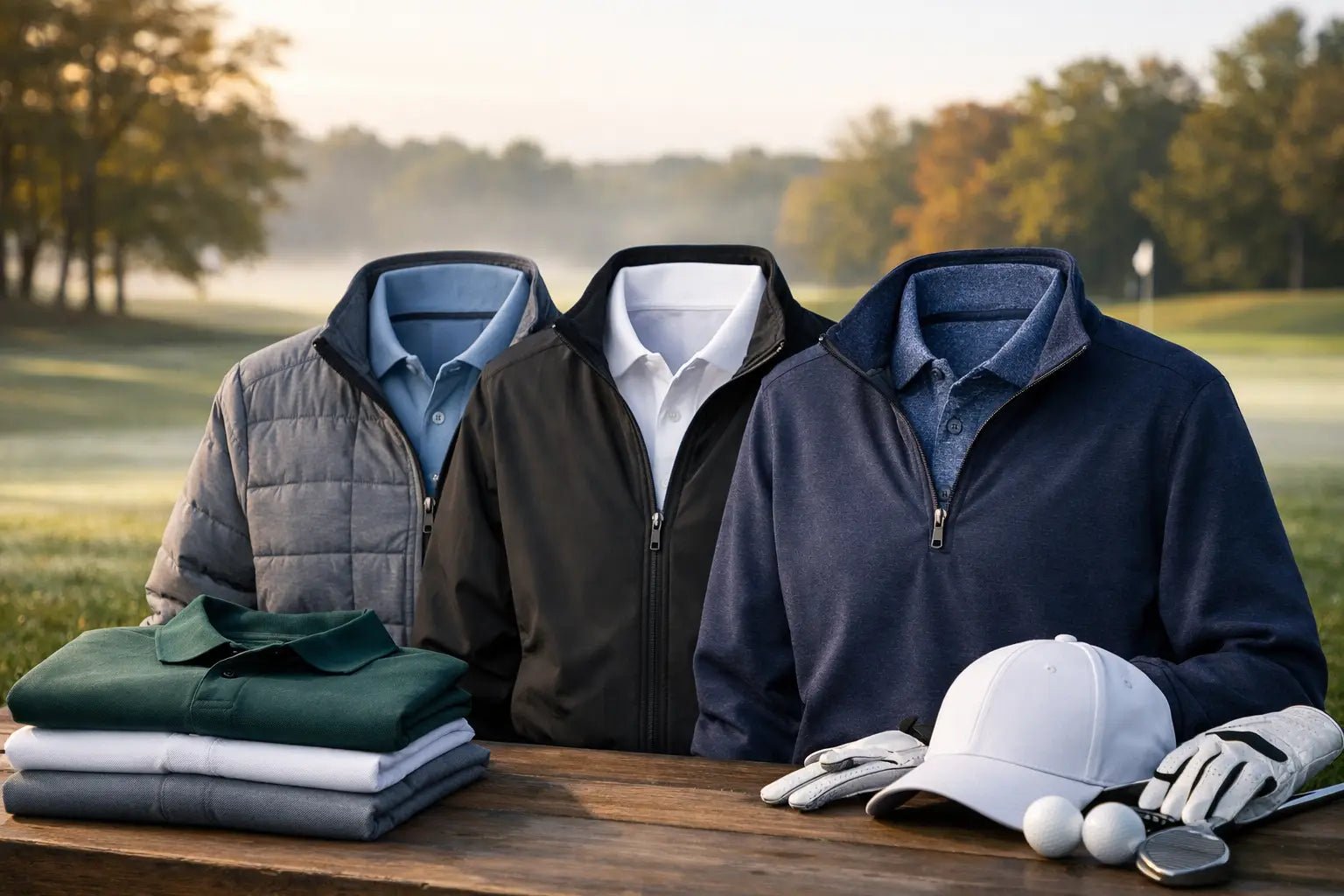


Windbreaker vs Waterproof Golf Jacket
A calm first tee can turn into crosswinds by the 6th and steady rain by the turn. That is why the windbreaker vs waterproof golf jacket question matters more than most golfers think. Get it wrong and you spend 18 holes either overheating, feeling restricted, or trying to ignore rain creeping through your layers.
The right outer layer is not just about weather protection. It changes how freely you swing, how comfortable you stay between shots, and how sharp you look walking onto the tee. On a golf course, where conditions can shift fast, your jacket needs to work as hard as the rest of your kit.
Windbreaker vs waterproof golf jacket: what is the actual difference?
At a glance, the two can look similar. Both are lightweight outer layers. Both are built for unpredictable weather. Both can earn a place in your golf wardrobe. But they are designed for different jobs.
A windbreaker is made to block wind and light chill. It is usually lighter, more breathable and easier to move in. It will often handle a bit of drizzle, but that is not its main role. Think of it as your answer to exposed fairways, early starts and days when the breeze is the main problem.
A waterproof golf jacket is built to keep rain out properly. That usually means taped seams, waterproof fabric and a construction designed to stop water getting through over a longer period. It gives you more serious protection, but it can feel slightly heavier or less airy than a pure windbreaker depending on the fabric and build.
If you are choosing between them, the question is not which one is better overall. It is which one is better for the conditions you actually play in.
When a windbreaker golf jacket makes more sense
Some rounds are not wet enough for full waterproofs, but they are still uncomfortable without an outer layer. That is where a windbreaker earns its place.
Wind can do more than make you feel cold. It can stiffen your arms, distract your tempo and make a mild day feel far less playable. A good windbreaker cuts that edge without wrapping you in a heavier shell. For golfers who run warm, that matters. You stay protected without feeling like you are playing inside a tent.
This is also the stronger option for active comfort. If you walk the course, carry or push your bag, and tend to heat up by the 4th hole, a windbreaker is often the cleaner choice. It is lighter in the bag, easier to throw on and take off, and more likely to stay comfortable across changing temperatures.
There is a style angle too. Windbreakers naturally sit closer to modern sportswear. They look sharp layered over a polo or mid layer and work well beyond the course. For golfers who want performance without the old-school waterproof look, this is usually the more versatile piece.
That said, there is a limit. If the forecast says proper rain rather than the odd passing shower, a windbreaker is not enough. Water-resistant is not the same as waterproof, and those differences show quickly once the weather turns.
When a waterproof golf jacket is the smarter play
If you are playing through rain rather than hoping to avoid it, this is the jacket you want. A waterproof golf jacket is built for commitment. It is there for wet starts, long drizzly back nines and days when the clouds do not look like they are moving anywhere.
The biggest benefit is obvious. You stay dry for longer. But there is more to it than that. Staying dry helps you stay focused, maintain grip confidence and keep your body temperature steadier. Once your layers get wet, comfort falls fast and your round usually follows.
For winter golf in the UK, a waterproof jacket often makes more sense than trying to stretch a lighter outer layer beyond its job. Damp air, repeated showers and persistent rain are common enough that serious rain protection is rarely overkill. It is simply practical.
The trade-off is that some waterproof jackets can feel less breathable than windbreakers. That is not always the case now, especially with better technical fabrics, but it is still worth thinking about. If a jacket locks rain out brilliantly but leaves you clammy after a few holes, it is not doing the full job. Golf outerwear needs weather protection and movement, not just a high spec label.
Fit matters as much as fabric
A jacket can be technically excellent and still feel wrong on the course if the fit is off. Golf is not static. You are rotating, reaching, bending and swinging. If your outer layer pulls across the shoulders or bunches at the chest, you will notice it straight away.
That applies whether you are comparing a windbreaker vs waterproof golf jacket or choosing between two jackets in the same category. The best fit gives you room to layer, enough stretch through the swing, and a clean silhouette that does not feel bulky.
For some golfers, the temptation is to size up for comfort. Sometimes that works, especially if you want room for a quarter zip underneath. But go too loose and the jacket starts moving more than you do. Excess fabric can distract on the backswing and feel messy in stronger wind.
A smarter move is to look for athletic shaping, flexible fabric and sleeves that allow movement without a boxy fit. Performance should look good too. There is no reason to choose between comfort and presence.
What to wear in real playing conditions
On a bright but breezy spring morning, a windbreaker is often perfect. It takes the bite out of the air, keeps your look light and stops you overheating once the sun appears.
On a mixed day with occasional showers, the answer depends on how long and how heavy those showers are likely to be. If rain is brief and the temperature is mild, a windbreaker with some water resistance may do enough. If you are likely to spend several holes in steady rain, go waterproof.
In autumn and winter, a waterproof golf jacket usually becomes the safer bet. The weather is less predictable, the air is damper, and once you get cold it is harder to recover during the round. In these conditions, reliable protection beats optimism.
If you only want one outer layer, think honestly about your golf calendar. Fair-weather summer rounds and range sessions point towards a windbreaker. Year-round golf in the UK points more strongly towards waterproof protection. If you play often, though, owning both is the strongest setup. One handles movement and breeze. The other handles proper weather.
Style is not a side issue
Golf outerwear has moved on. It no longer needs to look technical in the dullest way possible. The best jackets now bring together performance, cut and visual impact.
That matters because confidence is part of how you show up on the course. A jacket that looks sharp, fits properly and feels current is more likely to get worn. And the gear you actually want to wear is the gear that earns its place.
A modern windbreaker often gives you more room to express your style. Clean monochrome looks, sharper silhouettes and stronger detailing all fit naturally here. Waterproof jackets can do the same, but the design challenge is greater because the build is more technical. When brands get it right, though, the result is exactly what modern golf clothing should be - functional, confident and a long way from forgettable.
That is where a brand like Caddie Couture stands out. The point is not just to handle the weather. It is to do it with presence.
So which one should you buy?
If your main battle is wind, mild chill and changing temperatures, buy a windbreaker. It is lighter, easier to layer and better for golfers who want freedom and versatility.
If your main battle is rain, wet fairways and long rounds in unsettled weather, buy a waterproof golf jacket. It gives you the protection a windbreaker simply cannot match.
If you want the honest answer, most regular golfers benefit from having both. They solve different problems. One is your agile outer layer for breezy days. The other is your shield when the weather means business.
The better question is not windbreaker vs waterproof golf jacket in the abstract. It is what helps you play with more comfort, more confidence and less compromise on the days you actually tee it up. Choose for your conditions, choose for your swing, and choose something you will be glad to pull on before the first shot.