

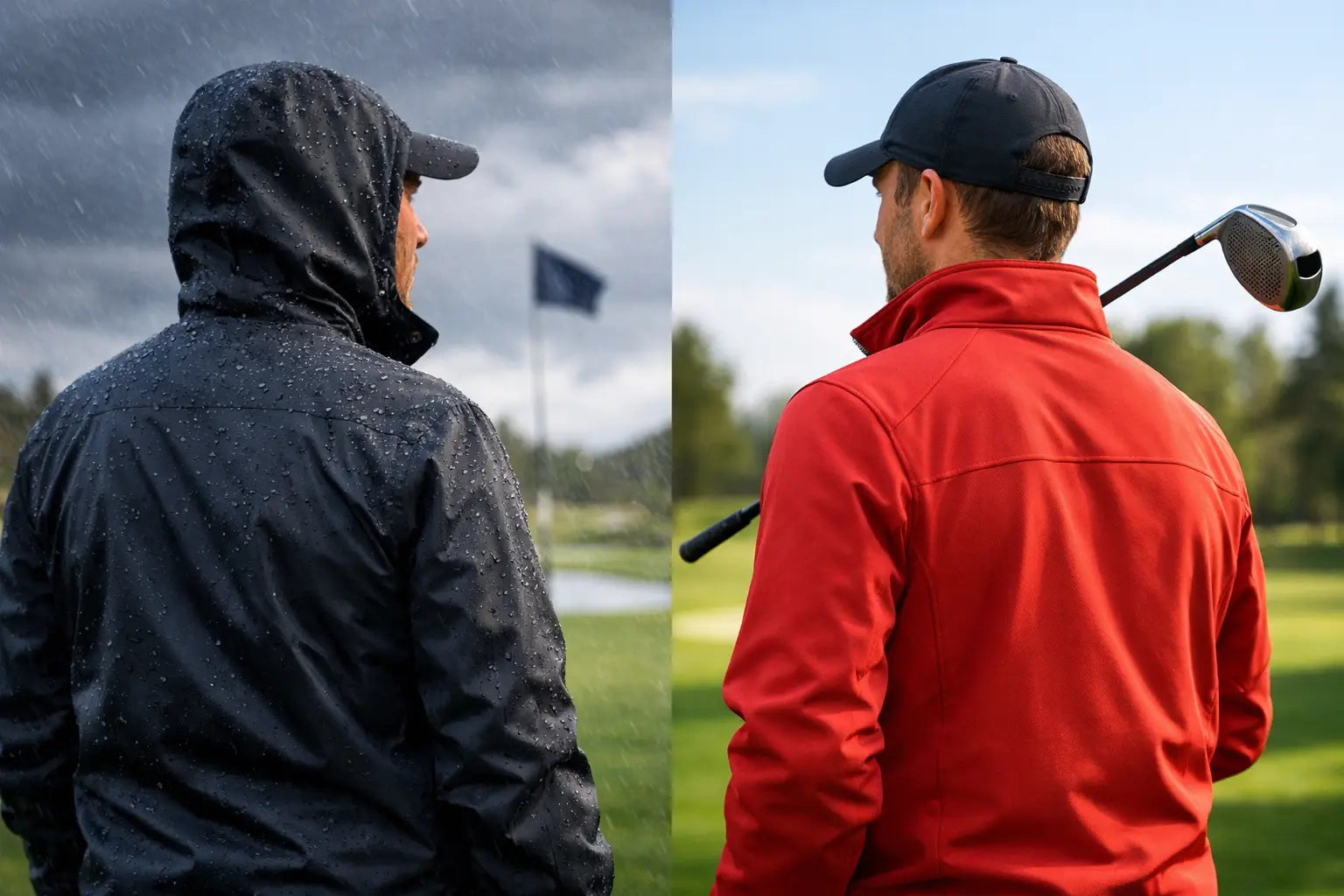
Windproof Jacket Versus Softshell for Golf
A cold crosswind on the back nine can make a perfect swing feel like hard work. That is where the windproof jacket versus softshell decision matters. Both can earn a place in a golfer’s wardrobe, but they solve slightly different problems. Choose well and you stay comfortable, mobile and focused on the shot. Choose badly and you are either clammy by the turn or shivering over every putt.
The best layer is not automatically the warmest, thickest or most technical-looking one. It is the piece that matches the forecast, your walking pace and the way you want to play. Golf requires more movement than a jacket designed for a commute, and a good layer should look as sharp on the first tee as it feels through impact.
Windproof Jacket Versus Softshell: The Real Difference
A windproof jacket is built to block moving air. It usually uses a tightly woven outer fabric or a windproof membrane to stop gusts cutting through your layers. Most golf windbreakers are light, packable and designed to sit easily over a polo or mid-layer. Their main job is simple: keep the wind off without turning your swing into a wrestling match.
A softshell is a more substantial stretch outer layer. It commonly combines a smooth, weather-resistant face with a softer inner surface, offering warmth, comfort and some protection from a light shower. Many softshells are highly wind-resistant, but that is not always the same as fully windproof. The distinction becomes obvious on an exposed links course or a blustery winter morning.
Think of it this way: a windproof jacket is the cleaner answer to wind. A softshell is the more versatile answer to cool, mixed conditions. Neither is automatically a substitute for a waterproof jacket in sustained rain.
Wind resistance is not always windproof
Product descriptions can make these terms sound interchangeable. They are not. Wind-resistant fabric reduces the chill but may allow air through when the breeze picks up. A truly windproof construction creates a more reliable barrier, particularly across the chest, shoulders and arms where wind can quickly drain warmth.
That protection comes with a trade-off. The more completely a fabric blocks air, the more carefully it needs to manage moisture from the inside. A quality golf windbreaker uses breathable fabric, venting or a lightweight build so you do not overheat while walking 18 holes. Cheaper windproof layers can feel plasticky and trap heat, which is hardly ideal when you are trying to stay composed over a short putt.
Softshell warmth comes from its construction
Softshell jackets tend to feel warmer because they are thicker and often have a brushed inner finish. They are less about creating a total barrier and more about giving you a comfortable, adaptable outer layer. On a cool, dry day, that extra body can be exactly right.
The downside is that a softshell can become too much once you are carrying a bag, climbing hills or catching a rare burst of sunshine. It is also generally bulkier in your golf bag. If your usual approach is to layer a polo, quarter zip and outer shell, a softshell may overlap with the warmth already provided by your mid-layer.
When a Windproof Jacket Wins
Reach for a windproof jacket when the forecast is dry but the wind has real bite. Early spring, late autumn and exposed coastal courses are prime territory. The air temperature may not look dramatic on an app, yet a persistent 20 mph breeze can make it feel much colder than the number suggests.
It is also the smarter choice for golfers who run warm. A lightweight windproof layer lets you begin the round over a polo or thin quarter zip, then adjust without stuffing a heavy jacket into your bag. It protects your core temperature while keeping your outfit streamlined.
For travel, it is difficult to beat. Windbreakers usually fold down smaller than softshells and are easy to keep in the car, locker or side pocket of a golf bag. That makes them a strong insurance policy for unpredictable British weather, especially when a bright start is likely to turn breezy after lunch.
Fit matters here. Look for enough room across the upper back and shoulders to complete a full turn, plus sleeves that do not pull above the wrist at the top of your backswing. A slightly dropped rear hem is useful too, keeping coverage in place when you bend to read a line or pick up a ball.
When a Softshell Is the Better Play
Choose a softshell for a cool, dry round where you want warmth without wearing several separate layers. It suits the golfer who feels the cold, plays at a steadier pace, or prefers one refined outer piece rather than a technical shell over a quarter zip.
Softshells come into their own on crisp mornings, winter range sessions and shoulder-season rounds with only a slight breeze. The stretch fabric can feel especially natural through the swing, while the softer interior brings a more premium, less crinkly feel than a traditional windbreaker.
They also work brilliantly beyond the course. A well-cut softshell can take you from the driving range to a post-round lunch without looking like you have just stepped off a hiking trail. That matters if your golf wardrobe is expected to have a life beyond the fairway.
Do not mistake shower resistance for waterproofing, though. Most softshells are treated with a durable water-repellent finish that beads off light drizzle. In persistent rain, water can work through the fabric, seams and zip areas. If wet weather is genuinely on the cards, take a dedicated waterproof layer instead of hoping your softshell will hold out.
Build Your Layering Around the Forecast
The strongest golf wardrobe gives you options rather than asking one jacket to do every job. Start with a breathable polo, add a quarter zip or golf hoodie when the temperature drops, then select your outer layer according to the conditions. This approach keeps your swing free and lets you change your setup between holes if the weather shifts.
For a mild but windy day, a polo and light windproof jacket may be all you need. For a cold, calm morning, a polo under a softshell is often more comfortable. On a chilly, exposed day, wear a quarter zip beneath a windproof layer. You get warmth from the mid-layer and wind protection from the shell, without relying on one bulky garment to do everything.
Avoid layering two restrictive pieces together. A thick softshell over a heavy hoodie can bunch at the shoulders and limit rotation. It may feel cosy on the practice green, but the restriction tends to show up when you need to make a committed driver swing.
Style Should Still Pull Its Weight
Technical does not have to mean forgettable. A plain windproof jacket is easy to pair with patterned polos, bold trousers and statement accessories, while a monochrome softshell can bring a clean, minimal look to a louder outfit. Conversely, a jacket with a distinctive print or colour can turn simple black trousers and a neutral polo into a full look.
The key is proportion. Lightweight windbreakers suit a sharp, athletic silhouette and pair naturally with tapered joggers. Softshells have more visual weight, so they look best when the rest of the outfit is clean and considered. Keep the fit close enough to look polished, but never so fitted that it catches across the chest during your swing.
At Caddie Couture, the point is not to blend into the fairway. Choose a layer that performs when the weather turns, then make sure it still looks like you meant to wear it.
The Quick Decision Before You Tee Off
If strong wind is the main concern, take the windproof jacket. If the day is cool, dry and you want a warmer all-in-one layer, choose the softshell. If rain is more than a passing threat, neither should be your only defence - pack waterproofs.
Before leaving for the course, check more than the temperature. Look at wind speed, rainfall timing and how exposed the venue is likely to be. Then choose the layer that lets you forget about the weather and put your attention where it belongs: the next shot.