

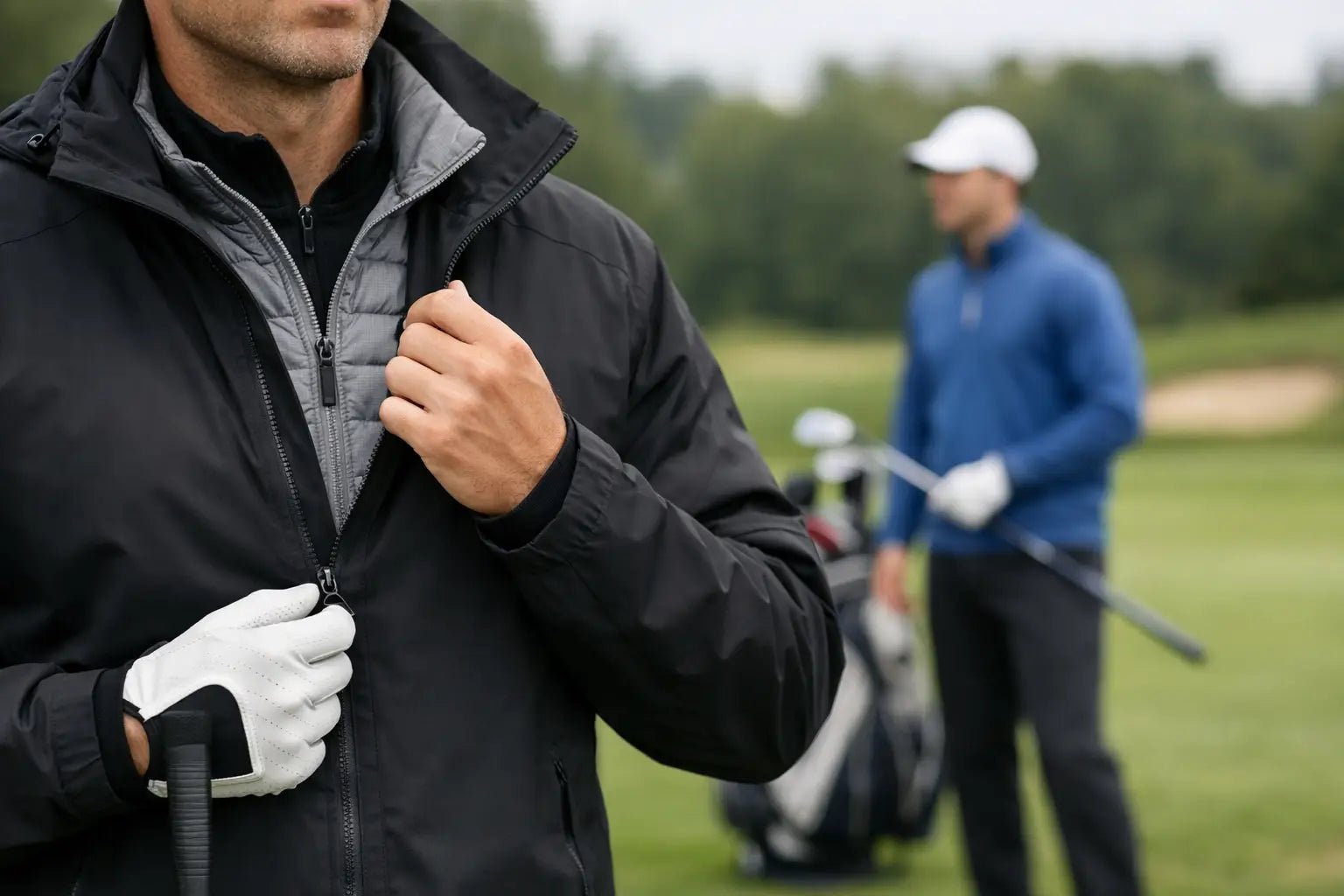
How to Layer Golf Outerwear Properly
The first tee can feel mild, the 7th can turn windy, and by the back nine you are either peeling layers off or wishing you had packed one more. That is exactly why knowing how to layer golf outerwear matters. Get it right and you stay warm, dry and free through the swing. Get it wrong and every layer starts fighting your game.
Golf outerwear should work with you, not sit on top of you like an afterthought. The best layered look is not bulky, stiff or overbuilt. It is sharp, lightweight and ready for changing conditions. Think performance first, but never at the expense of style. On a modern course, there is no reason you cannot have both.
How to layer golf outerwear without adding bulk
The biggest mistake golfers make is dressing for cold weather the way they would for a walk into town. On the course, you are moving, rotating and generating heat. That means your layers need to trap warmth without restricting the shoulders, bunching at the elbows or riding up through the swing.
Start with the principle that each piece should have a job. Your base layer manages moisture. Your mid layer adds warmth. Your outer layer protects against wind or rain. Once one piece tries to do all three, you usually end up with something too heavy to play in comfortably.
Fit matters just as much as fabric. A slim, athletic base under a clean quarter zip or hoodie will always perform better than two oversized layers fighting for space. If the base is too loose, it holds moisture. If the outer layer is too tight, it pulls across the chest and back. Good layering feels close but not compressed.
That is also where style starts to count. A well-built layered outfit looks intentional. Monochrome combinations feel clean and modern. A bold gilet over a neutral base gives shape without clutter. If you are wearing three different weights, colours and fits with no plan, the whole thing can look messy before you have even hit a shot.
Start with a base that earns its place
The layer closest to your skin is the one that sets the tone for the round. A proper golf base layer should be breathable, lightweight and smooth enough to sit under other pieces without friction. You want warmth, but more importantly you want moisture control. Even on cold days, golf is active. Walk a hilly course or carry your bag and you will feel it.
A technical long-sleeve base is usually the smartest choice when the temperature drops. It keeps the core warm early in the round and stops that cold, damp feeling that comes when cotton starts holding sweat. Cotton tees have their place off the course. Under golf outerwear in mixed weather, they are rarely the right call.
For milder days, a performance polo can still work as your first layer, especially if you are building with lighter outerwear on top. That gives you flexibility if the afternoon warms up. If it is genuinely cold from the start, a fitted thermal base under a polo or quarter zip gives you more control without changing your silhouette too much.
What to avoid at base level
Anything thick, anything baggy, and anything that twists during the swing. If you can feel seams rubbing under your arms or fabric gathering under your chest, it will only get worse once the next layer goes on.
Build warmth through the mid layer
This is where most golfers either get it exactly right or completely overdo it. The mid layer should hold warmth while staying flexible enough for a full shoulder turn. Quarter zips are a standout option because they are easy to adjust mid-round. Zip up into the breeze, open slightly when the sun comes out. Simple.
Golf hoodies also make a strong case here, especially for players who want a more contemporary silhouette. The key is choosing one that is cut for movement rather than casual lounging. You want stretch through the upper body and enough structure that it sits cleanly under a jacket or gilet.
If you run warm, your mid layer can be lighter than you think. A soft technical quarter zip over a base layer is often enough for crisp autumn mornings or breezy spring rounds. If you run cold, or if the forecast is sitting close to freezing, a slightly heavier brushed inner fabric can make sense. The trade-off is that thicker mid layers are less adaptable once you heat up.
This is where personal preference matters. Some golfers hate the feel of multiple sleeves stacked together and would rather wear a gilet over a warmer base. Others like the all-over warmth of a mid layer and only add a shell if the weather really turns. There is no single formula for every player, but there is a clear rule: if your swing starts feeling tighter on the range, remove one layer before the first tee.
Choose the outer layer for the forecast, not the wardrobe
Outerwear is where conditions decide the outfit. Wind, drizzle and cold all ask for slightly different answers. If you throw on the same jacket every time the weather looks questionable, you will eventually end up either overheating or feeling underdressed.
A windbreaker is ideal when the air is sharp but the rain is not a major factor. Wind chill is one of the biggest reasons a round starts comfortably and then falls apart. A lightweight wind-resistant layer cuts through that problem fast, especially on exposed fairways. The right one should feel light on the body and quiet through the swing, not crisp and noisy.
A gilet is one of the most useful pieces in golf outerwear because it protects the core while leaving the arms completely free. For players who hate any resistance across the shoulders, it is often the easiest way to stay warm without changing the swing. It also gives a cleaner, more fashion-led shape than piling on full-sleeve layers.
For wet conditions, a proper waterproof or water-resistant jacket earns its keep. But there is a trade-off here too. Some rain layers offer serious protection but feel too structured for regular use in dry weather. Others are more breathable and comfortable but less reliable in sustained rain. If the forecast suggests occasional showers, a lighter shell usually works. If it looks like four hours of steady rain, performance has to come before minimalism.
How to layer golf outerwear for wind and rain
If it is windy but dry, start light. A breathable base, a stretch mid layer and a windproof outer is normally enough. If rain enters the picture, reduce the bulk underneath and let the shell do more of the work. Too many thick layers under a waterproof can make you hot, clammy and restricted.
That balance is the difference between feeling prepared and feeling wrapped up.
Dress for the round, not just the temperature
The number on the weather app only tells part of the story. Tee time matters. So does the course. A sheltered parkland track on a still morning needs a different setup from an exposed coastal course with a crosswind all day.
For an early start, build for the coldest hour. It is easier to remove a layer after three holes than to spend the opening stretch trying to warm up. For afternoon rounds, especially in spring and early autumn, go more adaptable. A lighter base and a packable outer layer will usually carry you further.
Walking versus buggy use changes things too. If you walk, you will generate more heat and may need less insulation than you think. If you ride, you are more exposed between shots and can cool down quickly. The same applies to pace of play. A slow round in cold weather feels colder because you spend more time standing still.
Style still counts when the weather turns
Function matters, but layered golf outerwear should still look sharp. The easiest way to achieve that is by keeping the outfit visually clean. If one piece makes the statement, let the others support it. A bold patterned layer works best when the rest of the look is controlled. If you prefer a minimal outfit, use texture and fit to add depth rather than relying on loud contrast.
Modern golf style is not about looking overdressed. It is about looking considered. A fitted quarter zip, tailored joggers and a sleek gilet can look far stronger than a heavy traditional jacket that swallows the whole outfit. The same goes for women’s layering too. A streamlined silhouette always looks more premium than bulky winter kit, even when the technical performance is doing the heavy lifting underneath.
That is where brands like Caddie Couture have changed the mood around golf apparel. Performance gear no longer has to fade into the background. It can handle the weather and still bring presence to the fairway.
The easiest layering formula to trust
If you want a reliable setup for most cool-weather rounds, keep it simple. Start with a technical base. Add a stretch quarter zip or performance hoodie. Finish with either a gilet, windbreaker or rain layer depending on conditions. That gives you warmth, movement and enough flexibility to adapt through 18 holes.
You do not need a huge wardrobe to layer well. You need the right pieces in the right weights, and you need them to work together. When every layer has purpose, you feel the difference straight away. Less distraction. Better comfort. More confidence over the ball.
The best outerwear setup is the one you stop thinking about by the 2nd hole. If it keeps your swing free and your look sharp, you have got it right.