
How to Choose Golf Joggers That Actually Fit
You notice bad joggers by the third hole. They pinch when you squat to read a putt, ride up when you walk, and somehow look too casual and too stiff at the same time. If you are figuring out how to choose golf joggers, the sweet spot is simple - you want a pair that looks clean, feels athletic, and performs from first tee to clubhouse.
Golf joggers are not just track bottoms in disguise. The right pair brings structure, stretch and a modern silhouette that still feels course-ready. Get them right and they sharpen your whole look. Get them wrong and they can throw off both comfort and confidence.
How to choose golf joggers without guessing
The fastest way to narrow the field is to focus on four things: fit, fabric, function and finish. Style matters, obviously, but golf joggers need to earn their place beyond the mirror. They have to move, hold their shape and look intentional with the rest of your outfit.
Fit comes first because everything else depends on it. Even premium fabric looks off if the leg is too baggy or the cuff cuts into your ankle. A strong pair of golf joggers should taper cleanly without clinging, sit comfortably at the waist and leave enough room through the seat and thigh for a proper golf swing.
Then comes fabric. Golf is full of mixed conditions - cool mornings, warm afternoons, damp rough, light showers, long walks. Joggers need enough technical performance to handle that shift. Stretch, breathability and shape retention matter more than heavy thickness or lounge-level softness.
Function is where good design separates itself. Pockets need to sit flat and stay useful. Waistbands need to feel secure without digging in. Cuffs should look neat, not fussy. The finish is the visual side of the equation - clean lines, sharp colours and a silhouette that feels current rather than dated.
Start with the fit, not the size label
A lot of golfers shop by habit. If you always buy a medium in joggers, it is tempting to stop there. That is usually where mistakes begin. Different cuts, fabrics and rises can make the same labelled size feel completely different.
The best golf joggers sit close to the body without becoming skinny. You want a tailored leg, not compression wear. If the fabric pulls across the thigh or knee when you bend, they are too tight. If excess material bunches around the hips or calf, they are too loose.
What a good golf jogger fit looks like
At the waist, the fit should feel secure enough to stay put through a full round, but never restrictive. A drawcord can help fine-tune the fit, though the waistband still needs enough built-in structure to look polished.
Through the thigh, you need room to move. This is non-negotiable. Golf involves rotation, walking, crouching and repeated shifts in posture. A slim taper works well, but only if the upper leg still has enough give.
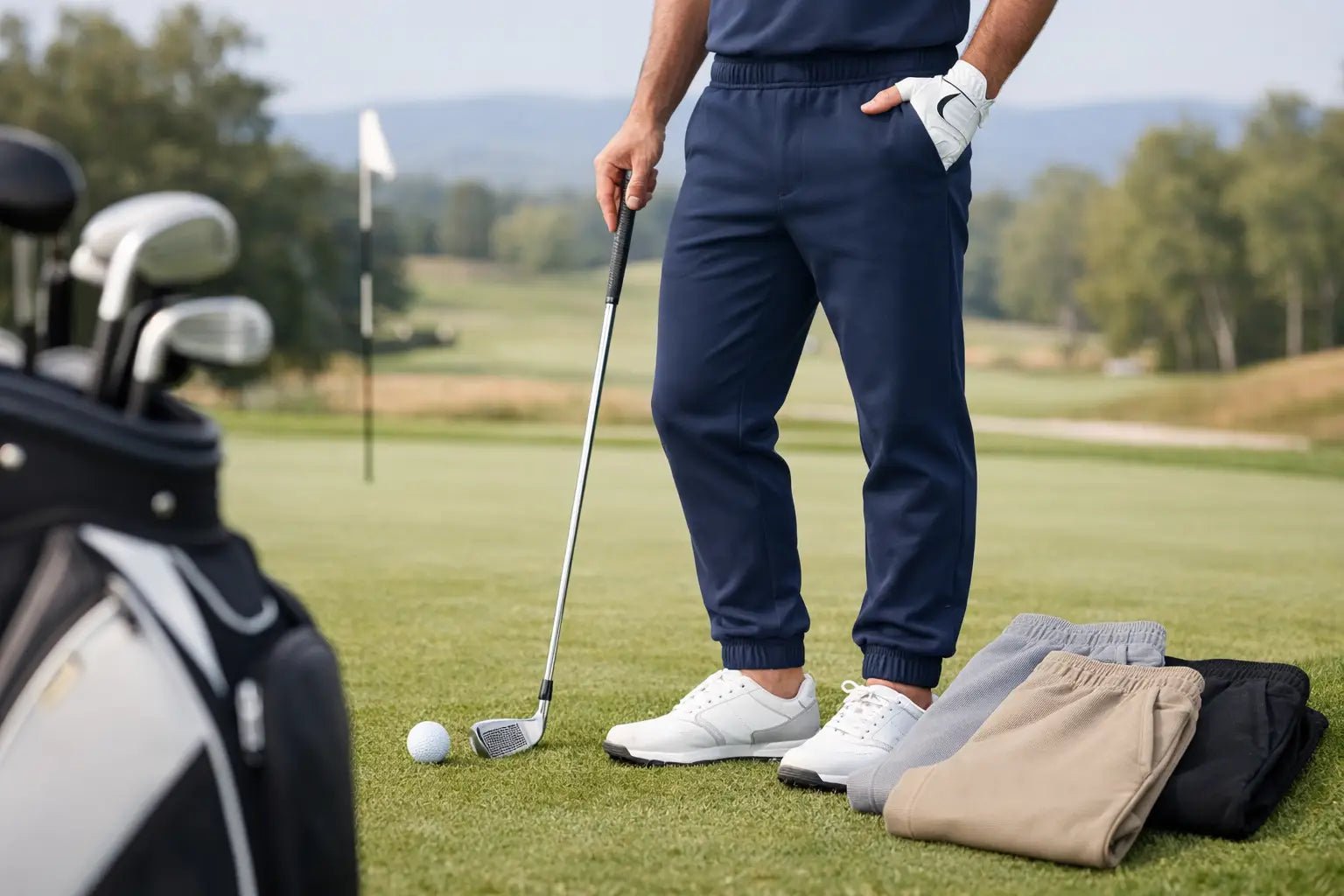
From the knee down, the line should narrow gradually. This is what gives golf joggers their cleaner edge compared with standard trousers. The cuff should sit neatly at the ankle, not hang over the shoe and not climb halfway up your shin when you walk.
If you are between sizes, the better choice depends on the fabric. High-stretch materials can often handle a neater fit. Less forgiving fabrics usually look better if you size up for cleaner drape.
Fabric decides whether they perform or just look the part
This is where plenty of joggers fall short. They look great online, then feel heavy, flimsy or too casual in real conditions. For golf, fabric needs to do more than feel soft.
Look for a performance blend with stretch built in. That gives you freedom through the swing and keeps the shape looking sharp after hours of wear. Breathability matters too, especially if you play through spring and summer or walk the course regularly. Nobody wants joggers that trap heat by the back nine.
A bit of structure helps as well. Overly thin fabric can cling in the wrong places and lose its shape quickly. On the other hand, material that is too thick can feel bulky and look closer to winter training kit than golf apparel.
The fabric details worth checking
Four-way stretch is ideal if you want unrestricted movement. Moisture-wicking properties help on warmer days and during long rounds. Water-resistant finishes can be useful in changeable weather, but there is a trade-off - some coated fabrics feel less breathable and slightly less soft.
That balance matters. If you mainly play in dry conditions, prioritise comfort and airflow. If your local course is often damp and breezy, a bit more weather resistance makes sense. There is no single best option for everyone. It depends on when and where you play.
Style matters - but it needs to be course-ready
Golf joggers work best when they look deliberate. That means cleaner than leisurewear and more modern than traditional trousers. The appeal is exactly that tension - athletic energy with a refined finish.
Colour plays a bigger role than people think. Black, navy, charcoal and stone are the easiest starting points because they pair well with bold polos, crisp midlayers and monochrome looks. They also feel versatile enough to wear beyond the course. If your upper half does the talking, neutral joggers keep the outfit balanced.
That said, style should not flatten your personality. Golf has moved on, and your wardrobe can too. A modern cut and confident detailing can make even a simple colourway stand out. Caddie Couture leans into that idea well - statement golf clothing works hardest when the fit stays sharp and the styling feels considered, not loud for the sake of it.
Avoid the two extremes
If the joggers look like gym kit, they can feel underdressed on the course. If they are too tailored and rigid, they lose the relaxed athletic edge that makes them appealing in the first place.
Aim for minimal branding, clean pocket placement and a tapered silhouette that looks smart with golf shoes. That gives you flexibility. You can pair them with a printed polo, a quarter zip or a lightweight jacket without the whole look fighting itself.
Think about the weather you actually play in
British golf rarely gives you one clean season. You can tee off in a chill, catch sunshine at the turn and finish in a breeze with sideways drizzle. That is why joggers make sense - but only if you choose them with conditions in mind.
For cooler months, a slightly weightier fabric with a brushed inner can add warmth without making you feel bulky. Just be careful not to go too thick, or they can start to feel sluggish during movement. For milder weather, lighter technical fabric is the smarter call. It keeps the fit crisp and feels easier over 18 holes.
If you travel to play or like one wardrobe that works across seasons, versatility wins. A midweight jogger with stretch and light weather protection is often the safest all-rounder. It will not be the warmest option in winter or the breeziest in peak summer, but it gives you more wear across the year.
Small details make a big difference
The details are usually what separate joggers you keep reaching for from the pair that ends up forgotten in a drawer. Pockets should hold tees, ball markers and a scorecard without adding bulk. Zipped pockets can be handy, especially if you prefer to keep valuables secure, but they should lie flat and not interrupt the shape.
Cuffs matter too. A clean elasticated cuff creates the modern tapered look, but it should not be overly tight. If it grips too hard, it can make the trouser look cheap and feel awkward after a few hours.
Waist construction is another one to check. Fully elastic waists can feel comfortable, but the smarter option is often a hybrid design with enough stretch to move and enough structure to look polished with a tucked or untucked polo.
Try them on like a golfer, not a mannequin
When you test joggers, do more than stand in front of a mirror. Bend, crouch, twist and take a few practice turns. Walk around. Put your hands in the pockets. Check where the cuff lands with your golf shoes on, not just in socks.
This is the easiest way to spot the issues that matter on the course. Fabric tension through the knee, waistband roll, pocket flare and ankle bunching are all obvious once you move properly. If something feels slightly off in the changing room, it will feel worse by the sixth hole.
One more thing - think about what you already wear. The right joggers should fit naturally into your golf wardrobe. If they only work with one top or one pair of shoes, they are probably not the most useful buy.
Golf joggers should do two jobs at once: perform without distraction and look like you know exactly what you are wearing. Choose a pair that moves easily, fits cleanly and brings some edge to your outfit, and you will feel the difference before you even peg the ball up.