
A Smart Guide to Golf Sale Shopping
Sale rails can be chaos. One minute you are eyeing a sharp quarter zip at a proper price, the next you are three tabs deep wondering whether a loud polo in the wrong size still counts as a bargain. This guide to golf sale shopping is here to cut through that. If you want kit that looks current, plays well and earns its place in your wardrobe, the smartest buy is not always the cheapest one.
Golf clothing sits in a category of its own. It has to move with you, hold up through mixed weather and still look sharp from first tee to clubhouse. That means sale shopping should be less about grabbing whatever is left and more about spotting genuine value. The win is finding pieces that feel as good on the course in three months as they do in your basket today.
What a good golf sale buy actually looks like
A strong sale purchase does three things at once. It saves you money, upgrades your rotation and solves a real gap in your golf wardrobe. If a piece only does one of those, it may not be the deal it first appears.
Start with wearability. Ask yourself where the item fits in your week. A lightweight polo in a colour you can wear with two pairs of trousers has more long-term value than a heavily discounted top you will only reach for once. The same goes for outerwear. A windbreaker or gilet that covers breezy spring mornings and late summer evenings will usually work harder than a niche item bought only because the markdown looks dramatic.
That does not mean you should play it safe every time. Sale shopping is also a smart moment to buy pieces with more attitude - bold prints, sharper monochrome styling, colours that stand out on the fairway. The key is balance. If the cut is right and the fabric performs, statement design can still be a practical buy.
A guide to golf sale shopping by category
Different categories deserve different standards. Treating them all the same is where most sale mistakes happen.
Polos and base layers
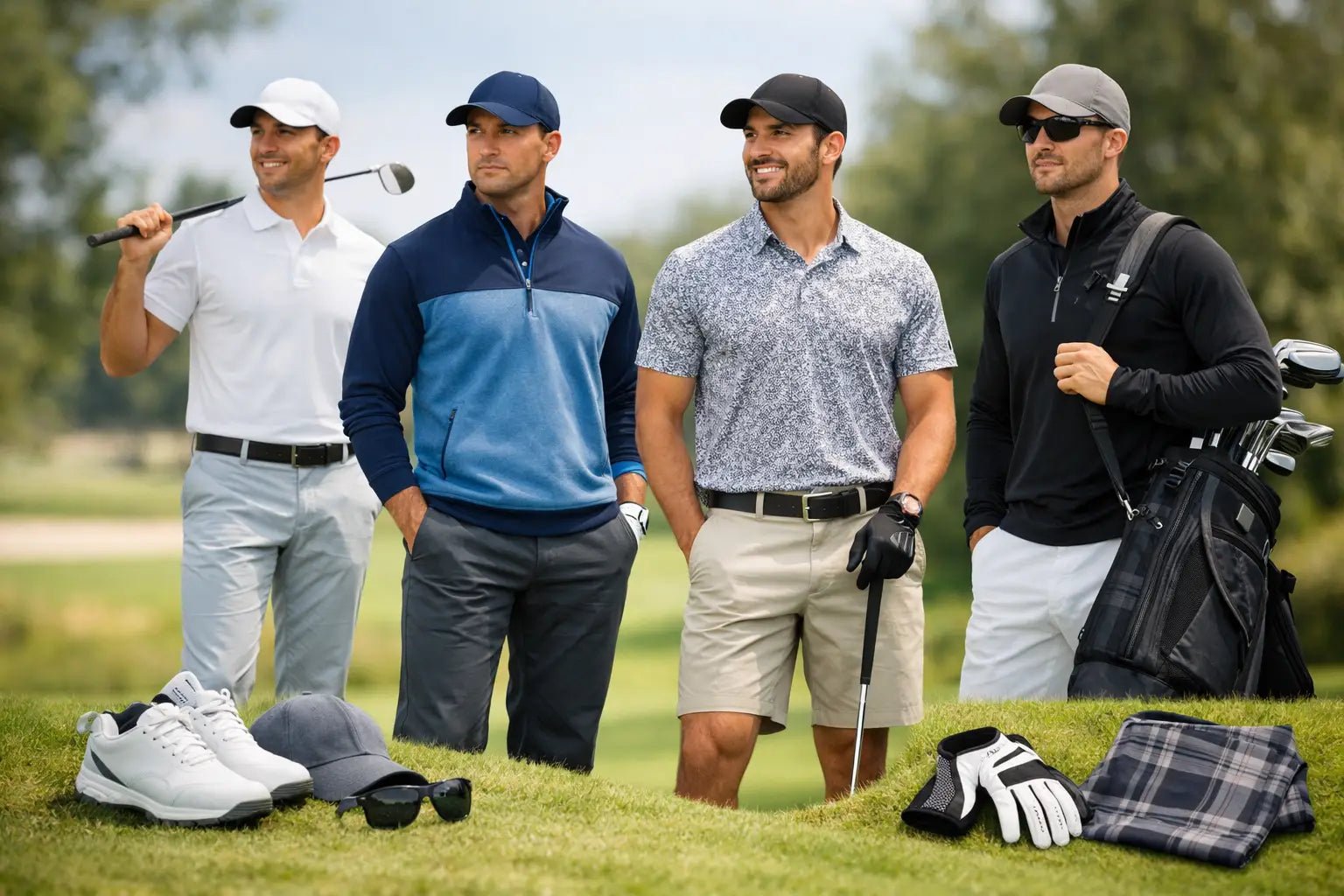
Polos are often the easiest win in a golf sale. They carry a lower price point than outerwear, you are likely to wear them often, and they can instantly modernise your look. Look closely at the collar shape, stretch in the fabric and how the body is cut. A good golf polo should sit cleanly across the shoulders, move freely through the swing and avoid looking boxy.
Base layers are more technical, so fabric matters even more. Check for breathable stretch and a close fit without compression that feels overdone. If you play through colder months, this is one area where sale shopping can build real value quickly.
Mid-layers and outerwear
Quarter zips, hoodies, gilets and windbreakers tend to offer bigger savings, but they also demand more scrutiny. This is where shoppers can be tempted by headline discounts on pieces that are less versatile than they seem.
Think season first. A lighter quarter zip can cover a huge part of the UK golf year. A heavier hoodie may be ideal if you prefer a sport-led look and want something that works off the course too. Windbreakers are brilliant for exposed layouts, but check whether the cut leaves room for layering underneath. A deal is only good if the piece actually works in your playing conditions.
Bottoms and accessories
Joggers and golf trousers can be excellent sale buys if you already know the fit works for you. If not, proceed with a bit more care. Leg shape, waist comfort and fabric weight all affect whether they end up as favourites or regrets.
Accessories are the easy add-ons, but they should still earn their place. Gloves, towels and ball markers make sense when they complete an order you were already making. They are less clever when they push you towards buying extras you did not need.
Fit first, discount second
This is the rule that saves the most money in the long run. If the fit is off, the discount is irrelevant.
Golf apparel has to perform during movement, not just when you stand in front of a mirror. A polo that pulls across the chest or rides up through the swing will not improve with time. A jacket that feels too tight over a mid-layer will stay in the wardrobe when the wind picks up. Sale shopping works best when you know your measurements, understand how specific brands cut their garments and pay attention to product notes on fit.
If you sit between sizes, think about how you actually wear your gear. Some players want a cleaner, more tailored look. Others prefer extra room for layering. Neither is wrong, but buying without that clarity often leads to compromise. Better to miss a deal than buy something that never feels quite right.
Fabric tells you whether it is really worth it
The fastest way to spot quality in a sale is to stop staring at the percentage off and read the fabric story.
For polos and tops, stretch, breathability and moisture control matter. For outerwear, lightness, wind resistance and layering potential matter. For colder rounds, warmth-to-weight ratio is worth paying attention to. The best-performing pieces tend to feel considered rather than overbuilt. They move cleanly, sit well and do not fight against your game.
There is also the look of the fabric. Technical performance is essential, but so is finish. If a garment has a crisp shape, rich colour and refined detailing, it is more likely to keep earning wear. Style matters because confidence matters. You play differently when you feel put together.
Timing matters more than most shoppers think
The best sale shopping is rarely random. It usually happens when you know what the season is about to need.
At the end of summer, look for lightweight layers you can carry into autumn. During winter sales, think ahead to pieces that still make sense by March and April, not just the coldest week in January. Transitional kit is often where the strongest value lives because it covers more conditions.
There is a trade-off, of course. If you hold out for the deepest markdowns, size availability and colour choice narrow quickly. If you shop earlier, you may pay a touch more but get the exact size and style you want. The smarter move depends on whether you are buying a wardrobe staple or taking a chance on something more fashion-led.
How to avoid the common golf sale traps
Most sale mistakes come from speed. A discount creates urgency, and urgency can make average products look better than they are.
One trap is buying for fantasy golf. That sleeveless top might look great, but if you only play in cool, windy conditions, it may spend most of the year folded away. Another is overbuying statement pieces without enough grounding basics. A bold print works best when you already own the shorts, joggers or layers that let it slot in easily.
There is also the false economy of poor quality. Cheap fabric that loses shape, traps heat or feels stiff after a few wears is not a bargain. Golf apparel gets tested through repetition - swings, walking, washing, weather. If it cannot handle that, the markdown means very little.
Build a sharper wardrobe, not a bigger one
The best guide to golf sale shopping is really a guide to editing. You do not need more pieces. You need better ones.
A smart golf wardrobe usually starts with a dependable core: a few polos that make an impact, one or two mid-layers you can wear constantly, practical outerwear for changing conditions and bottoms that fit properly. Once that base is covered, sale shopping becomes more enjoyable because you can buy with intent. You are not guessing. You are upgrading.
This is also where style becomes more personal. Maybe your thing is clean monochrome with strong structure. Maybe you prefer brighter patterns that lift the whole look. Modern golfwear gives you room to choose, and a good sale is one of the easiest ways to lean further into your own lane without overspending.
If you are shopping with that mindset, brands that blend performance with a stronger visual identity tend to offer the best value. Caddie Couture, for example, makes sense for golfers who want their kit to work hard and look sharper than the standard clubhouse uniform.
Shop with confidence, not just urgency
A sale should feel like an opportunity, not a scramble. Before you buy, picture the item on an actual round. What will you wear it with? What weather does it suit? Does it fit your game, your style and your schedule? If the answer is clear, you are probably looking at a strong buy.
The sharpest sale shoppers are not the ones who collect the most deals. They are the ones who end up with wardrobes that feel intentional, current and ready for every tee time. Buy like that, and the discount is only the bonus.