

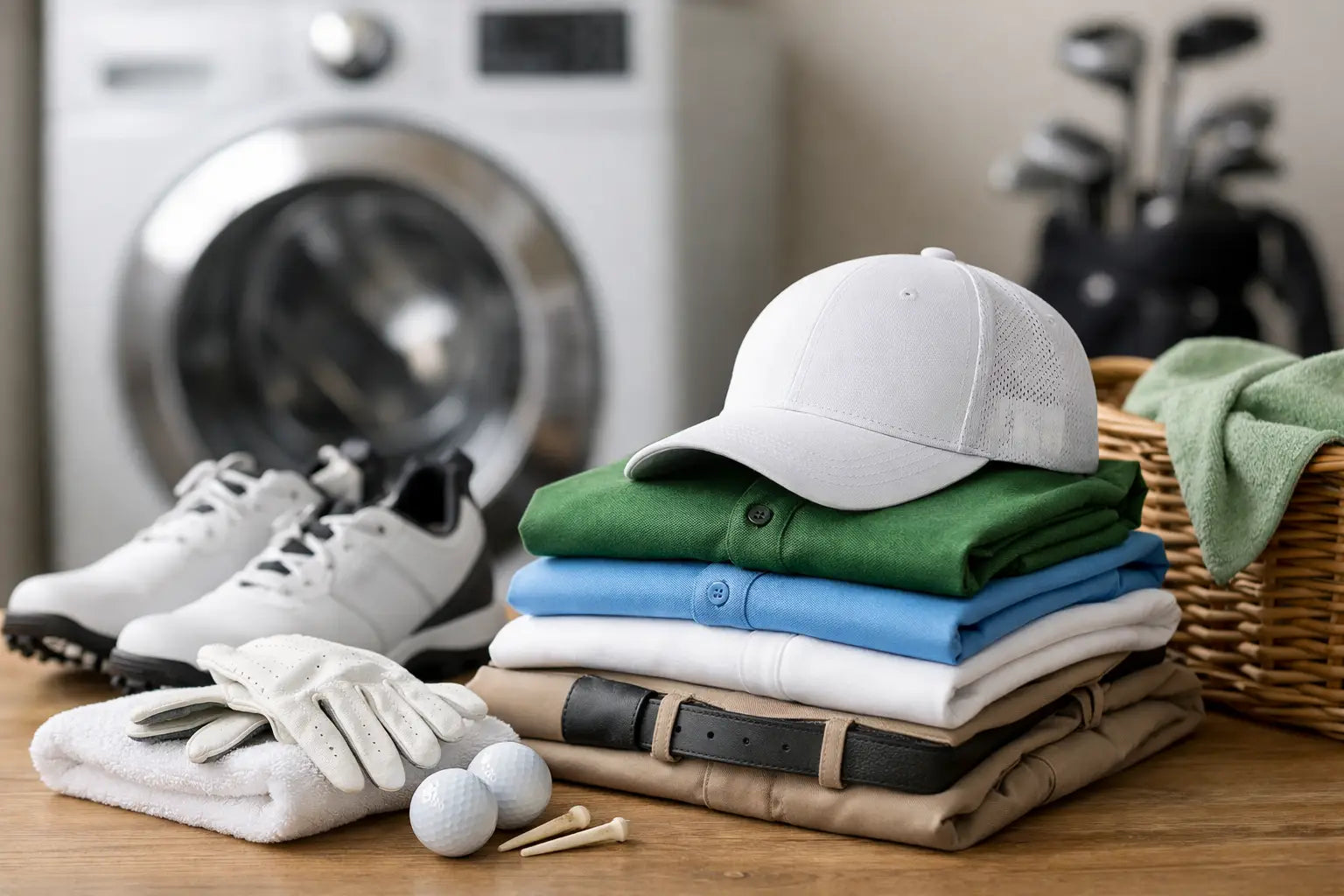
Golf Clothing Care: Keep Your Kit Course-Ready
A sharp polo can lose its shape after a handful of careless washes. A bold print can fade before the season is out. And a rain layer that once handled a wet back nine can start wetting out because it has been treated like a basic sweatshirt. Golf clothing care is not fussy for the sake of it - it is how you keep performance fabric performing and your on-course look looking intentional.
The good news: you do not need a complicated laundry routine. You need a few smart habits, the right settings and the discipline to read the care label before sending everything through the same hot wash.
Golf clothing care starts before the wash
The wash begins in your kit bag, not at the machine. Do not leave damp polos, towels or gloves bundled together after a round, especially in the boot of the car. Sweat, moisture and soil create the perfect conditions for odour to settle into technical fibres. Hang pieces up as soon as you are home and let mud dry before brushing it away.
Check pockets before washing. Tees, ball markers and scorecards are obvious offenders, but a forgotten snack wrapper or energy gel can make a real mess. Fasten zips, close hook-and-loop tabs and turn printed or patterned garments inside out. That last move helps protect surface finishes, prints and brighter colours from friction in the drum.
Separate your wash with a little more thought than light versus dark. Keep white performance polos away from deep navy, black and strongly coloured pieces, particularly for the first few washes. Wash towels separately when possible. Their heavier loops can rub against lighter technical fabric and encourage pilling over time.
Treat marks while they are fresh
Grass, mud, sunscreen and food marks are part of a proper golf day. The trick is not to let them settle. Dab sunscreen or oil marks with a small amount of mild liquid detergent before washing, then leave it for a few minutes. For mud, brush off the dried excess first rather than grinding it further into the fabric with water.
Avoid bleach unless the garment label specifically permits it. It may promise a clean reset, but it can weaken fibres, affect colour and strip the finish from performance clothing. Strong stain removers deserve the same caution. Test any product on an inconspicuous area when you are dealing with a statement print or contrast trim.
Wash performance polos, hoodies and joggers with care
Most golf polos, quarter zips, hoodies and joggers are made to stretch, breathe and move with your swing. Heat and harsh detergent are the quickest ways to compromise those qualities. In most cases, a cool or 30°C wash on a gentle cycle is the right call. The care label always wins if it says otherwise.
Use a liquid detergent designed for everyday colours or sportswear and measure it properly. More detergent does not mean a cleaner garment. It can leave a residue that traps odour and affects wicking performance, leaving fabric feeling less breathable when you are walking 18 holes in warm weather.
Fabric conditioner is usually a poor match for technical golf kit. It can coat synthetic fibres and reduce their ability to move moisture away from the skin. If a polo has started holding onto a stale smell, skip the conditioner entirely, wash it inside out and avoid overloading the machine. Clothes need room to rinse clean.
Cotton-rich pieces can sometimes handle a little more heat than synthetic performance wear, but there is still a trade-off. A hotter wash may tackle stubborn dirt, yet repeated heat can shrink fabric, soften crisp structure and dull colour. Save higher temperatures for garments whose labels explicitly allow them, not as a default after a muddy medal round.
Drying is where fit is won or lost
Air drying is the safest option for most golf apparel. Shape collars, smooth out seams and hang garments away from direct, intense sunlight. Too much sun can gradually fade darker tones and bright patterns, while radiator heat can be hard on elastic fibres.
A tumble dryer is convenient, but it is not always your kit's best friend. High heat can affect stretch, shrink cotton blends and shorten the life of bonded details. If the care label allows tumble drying, choose a low setting and remove the garment while it is still slightly damp. Hang it to finish drying instead of cooking it until bone dry.
Do not iron performance logos, printed graphics or waterproof shells directly. A low iron may be suitable for some polos, but turn them inside out and use the care label as your guide. Steam is often the lower-risk way to freshen a garment that has picked up creases in a packed weekend bag.
Golf clothing care for waterproofs and wind layers
Waterproof jackets, windbreakers and gilets need a different mindset. When water stops beading on the outside, it does not automatically mean the garment has failed. Body oils, sunscreen, dirt and ordinary detergent residue can clog the durable water-repellent finish, known as DWR. The outer fabric then absorbs water and feels wet, even when the membrane beneath is still doing its job.
Wash waterproof pieces only when they need it, using a specialist cleaner or the product recommended on the label. Standard detergent and conditioner can compromise breathability and water repellency. Zip everything up, empty the pockets and wash the shell separately or with similar lightweight outerwear.
Some waterproof garments can have their water-repellent finish revived with low tumble heat after washing, while others need a wash-in or spray-on reproofer. It depends entirely on the fabric construction and care instructions. Reproofing is worthwhile when rain no longer beads and rolls away after a proper clean. It is maintenance, not a miracle cure for tears, worn seams or damaged tape.
Never dry clean a waterproof layer unless the manufacturer specifically says it is safe. Solvents can damage coatings and adhesives. If you spot a small snag or pinhole, deal with it early using a suitable repair patch rather than letting it become the reason your favourite layer sits unused on wet-weather days.
Gloves, towels and the small details
Golf gloves take more punishment than most players admit. Sweat, grip pressure and repeated fastening all take their toll. Let a glove dry naturally after every round, laid flat or gently shaped rather than left crumpled in a pocket. Keep it away from radiators and direct sunlight, which can stiffen leather and reduce feel.
Leather gloves should not normally go through the washing machine. Wipe away surface dirt carefully with a barely damp cloth, then allow the glove to dry slowly. Synthetic gloves may be more forgiving, but the label still matters. Rotate between two gloves if you play regularly in warm or wet conditions. Each one will dry more thoroughly and last longer.
Golf towels can be washed more often, especially if they have been used on muddy grips or shoes. Shake them out first, wash them with similar colours and avoid excessive conditioner, which reduces absorbency. Ball markers and other small accessories should be removed before the wash, not discovered in the filter afterwards.
Store your golf wardrobe like it matters
Clean, completely dry clothing lasts longer in storage. Hanging polos and outer layers is ideal, while heavier hoodies and knitwear are better folded to prevent shoulders stretching. Avoid packing damp kit into drawers, kit bags or airtight boxes. The musty smell is difficult to shift, and mildew is worse.
For seasonal pieces, give every item a final wash before putting it away. Sweat and sunscreen left in fabric for months can cause discolouration and lingering odour. Store waterproofs loosely rather than tightly compressed, and keep leather gloves somewhere cool and dry.
Caddie Couture pieces are made to bring performance and presence to the fairway. Give them the same consideration off the course and the fit, colour and technical feel will keep showing up when your tee time does.
The best routine is the one you will actually keep: air out your kit after every round, wash it cool when it needs it and never let convenience turn premium golf clothing into disposable clothing.