

What Golf Clothes Suit Rain? Stay Dry in Style
The forecast says showers. Your tee time says play on. So, what golf clothes suit rain without leaving you feeling bulky, sweaty or dressed like a walking tent? The right answer is a considered system: light layers next to the skin, protection on top and enough stretch throughout to make a full swing with confidence.
Rainy-day golf does not mean sacrificing your look. It means choosing pieces that work harder, keep their shape and still look sharp when the clouds roll in. Minimal black, a punchy print or a clean monochrome fit all land better when the kit underneath is genuinely built for the conditions.
What golf clothes suit rain on the course?
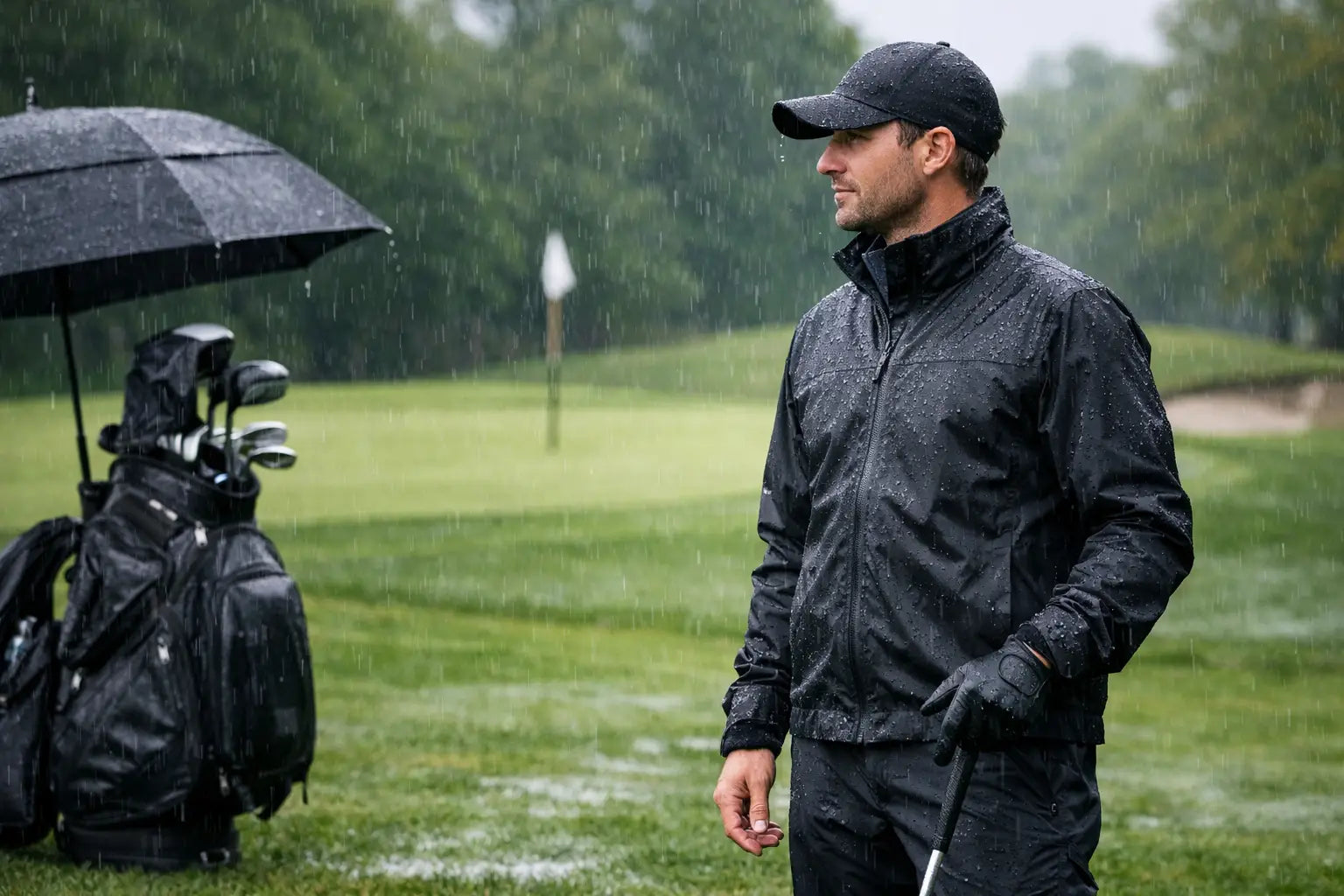
For most rounds, start with a performance polo, add an insulating mid-layer if needed, then finish with a waterproof or water-resistant outer layer appropriate for the forecast. Pair that with flexible trousers, a proper rain glove and a cap that keeps water out of your eyes.
The distinction between water-resistant and waterproof matters. A water-resistant windbreaker is a smart choice for light showers, drizzle and gusty days when you need a little protection without too much heat. In persistent rain, a fully waterproof jacket and trousers are the better call. They cost more and can feel less breathable, but staying dry for four hours is worth it.
The goal is not to wear every layer you own. It is to wear the few pieces that let you move, regulate your temperature and stay focused on the next shot.
Start with a performance polo
Your base layer still matters in wet weather. A cotton polo absorbs moisture, gets heavy and can leave you cold once the temperature drops. Choose a technical performance polo instead, ideally one with moisture-wicking fabric and a close-but-comfortable fit.
A good polo helps move sweat away from your skin while providing a clean foundation under a quarter zip or jacket. It also means that if the rain stops and the course warms up, you can shed a layer without looking like you have just come from the gym.
For autumn and winter golf, a long-sleeve performance top can take the place of a polo. Avoid anything too thick or restrictive through the shoulders. Rainy weather often comes with wind, and you need freedom to rotate rather than fight your sleeves at the top of the backswing.
Add warmth with a quarter zip, hoodie or gilet
The mid-layer is where comfort is won or lost. A lightweight quarter zip is the most versatile option for changeable conditions. It adds warmth to the chest and arms, zips up quickly between shots and is easy to remove when the rain passes.
A golf hoodie brings a more relaxed, modern edge and works well on cool, showery days, particularly under a roomy waterproof jacket. Look for technical stretch fabric rather than heavy fleece. The latter may feel cosy on the first tee, but it can become damp, restrictive and far too warm once you start walking.
A gilet is ideal when the air is cool but your arms need maximum freedom. It protects your core without adding material around the swing, and it can add a strong layer of contrast to an otherwise monochrome outfit. It will not replace a rain jacket in a downpour, but it is excellent for light rain combined with a windproof shell.
Choose a waterproof jacket that lets you swing
A golf waterproof should not feel like a compromise. The best jackets are light, breathable and cut with enough room across the back and shoulders for a full turn. Try the jacket on with your normal golf layers underneath, then make a few practice swings. If it pulls across the upper back, rides up at the wrists or feels tight when you finish the swing, leave it.
Prioritise taped seams, a high collar and adjustable cuffs. Taped seams help stop water getting through the stitched areas, while cuffs and a drawcord hem prevent rain and wind from creeping in. A longer back can also be useful when bending to read putts or pick the ball out of the hole.
Keep the styling clean. A black waterproof jacket is a reliable staple that works with almost anything. If your game has more personality, use the outer layer as the statement piece and keep the polo and trousers pared back. Wet weather may be grey, but your outfit does not need to disappear into it.
Do you need waterproof golf trousers?
It depends on the forecast and the course. If there is steady rain, standing water or wet rough all day, waterproof over-trousers are a very smart addition. Put them on before the first hole, rather than waiting until your regular trousers are soaked. They are especially useful for winter rounds when damp fabric quickly becomes cold fabric.
For lighter rain, performance golf trousers with a water-repellent finish are often enough. They offer a cleaner silhouette, better day-to-day comfort and more flexibility than traditional over-trousers. Stretch joggers can work too, provided they are designed for golf and will not drag in wet grass around the ankle.
Fit is crucial. Trousers that are too loose can catch during the swing and look untidy; trousers that are too slim can limit movement when you crouch, walk uphill or line up a putt. Aim for a tapered fit with room through the seat and thighs. You want sharp lines, not a restrictive squeeze.
Small accessories make a big difference
Rain gloves are one of the simplest ways to protect your score in wet weather. Unlike a standard leather glove, a rain glove is designed to grip better as it gets wet. Carry a pair, and keep them in a pocket or sealed pouch until you need them.
A waterproof cap or a structured golf cap helps keep rain out of your eyes, which matters more than most players realise when judging pace on the greens. A beanie is better when the temperature has really dropped, but make sure it fits comfortably without affecting your focus or causing you to overheat on the walk.
Bring at least two towels. Keep one dry and protected inside the bag for grips, hands and face, then use the other for clubs and ball. A rain hood for the bag is essential in prolonged rain, because dry clubs and dry gloves are only useful if the rest of your kit stays protected too.
Footwear deserves the same attention. Waterproof golf shoes with reliable traction keep your feet dry and give you a stable base on slippery tee boxes and damp slopes. Spikeless shoes can be perfectly capable in a shower, but if the ground is soft and saturated, a more aggressive outsole or spikes provide extra reassurance.
Dress for the rain you actually have
A short, light shower in July needs a different outfit from a wet, windy round in November. Overdressing is almost as frustrating as underdressing. If you are too warm, you sweat beneath your waterproofs; if you are too cold, your hands stiffen and your rhythm goes with them.
For mild drizzle, a performance polo, lightweight quarter zip, water-resistant jacket and technical trousers may be all you need. For cold, persistent rain, switch to a long-sleeve base layer, insulated mid-layer, waterproof jacket, waterproof trousers, rain gloves and waterproof shoes.
Pack layers even if the morning looks clear. British golf weather has a habit of changing between the car park and the fourth tee. A well-stocked bag gives you options, and options keep you playing rather than heading for the clubhouse early.
Keep the fit sharp when the weather is not
Rain gear should protect your game, not hide your style. Build around versatile technical essentials, then choose one element that feels like you: a standout polo under a neutral shell, a bold quarter zip against black trousers, or a crisp all-black look with a graphic accessory.
Caddie Couture approaches wet-weather dressing the same way it approaches every round: performance first, personality always. When every layer has a purpose and the fit still feels like you, bad weather becomes part of the challenge, not an excuse to play safe.