

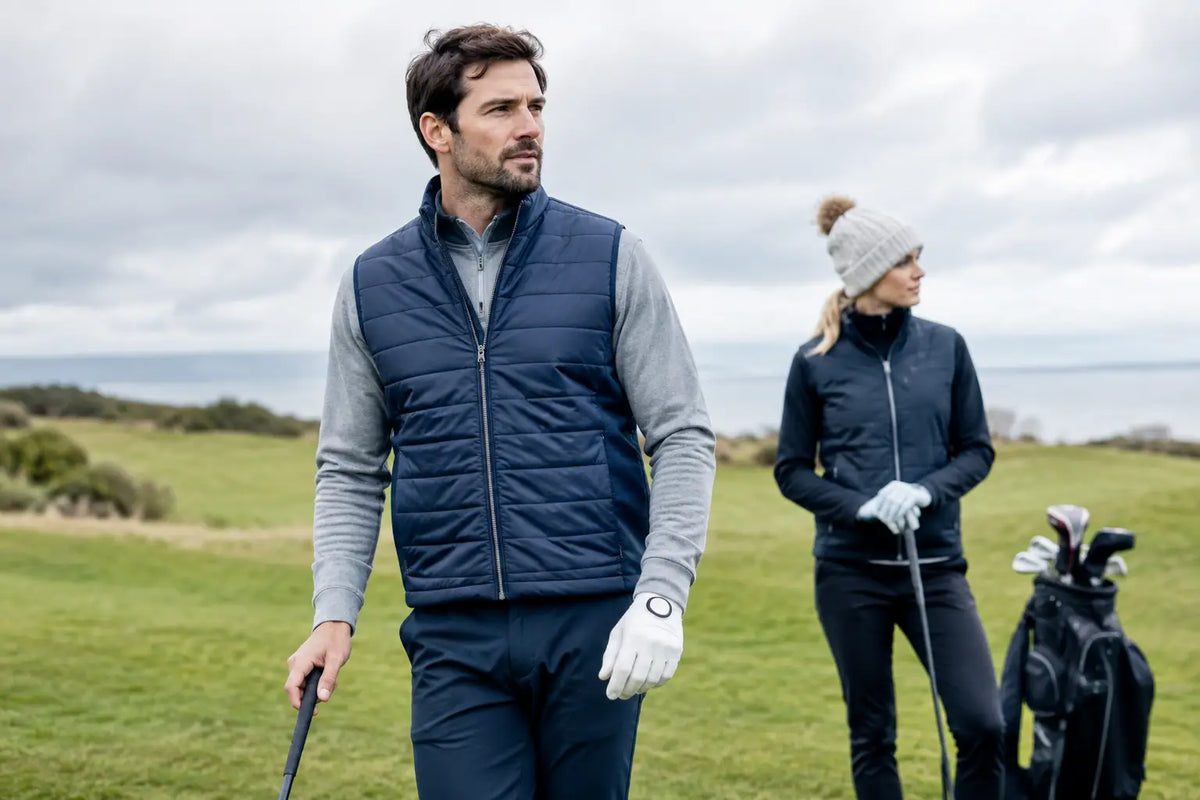
Best Golf Layers for British Weather and Style
A bright first tee can turn into sideways rain by the turn. That is British golf. The best golf layers are not about piling on bulk before you leave the house. They are about building a look that moves with your swing, handles a temperature drop and still looks sharp when the clubhouse is calling.
Forget the old-school approach of one heavy jumper and crossed fingers. A better layering system gives you options. Peel a piece off when the sun breaks through, add protection when the wind picks up, and keep every part of your outfit working as hard as your game.
What Makes the Best Golf Layers?
The right layers have three jobs: manage moisture, retain warmth and block the elements without restricting movement. Get any one of those wrong and a four-hour round can feel much longer than it needs to.
Fit matters just as much as fabric. A base layer that bunches at the wrists will distract you over the ball. A jacket with rigid shoulders can make your backswing feel cramped. And an oversized mid-layer may keep you warm, but it can look more Sunday dog walk than Saturday tee time.
The strongest golf outfits are built in slim, purposeful stages. Each layer should look good on its own and sit cleanly under the next. That way, you are ready for a mild spring morning, a blustery autumn medal or a cold winter fourball without losing your edge.
Start With a Performance Base Layer
Your first layer sets the tone. On cool or cold days, a lightweight performance base layer sits close to the skin and moves perspiration away before it has the chance to leave you clammy. That is especially useful if you tend to walk the course or play hilly tracks where the temperature can feel different from the first hole to the eighteenth.
Choose a close fit with stretch through the shoulders, chest and arms. It should feel supportive, not squeezed. Long sleeves are the obvious choice in late autumn and winter, while a short-sleeve performance polo often handles the same job during warmer months.
A good polo is more versatile than people give it credit for. It delivers a clean collar under a quarter zip, works with a gilet, and stands confidently on its own once the weather improves. Go for technical, quick-drying fabric rather than a thick cotton option. Cotton can feel comfortable at the start, but it holds moisture and loses its shape when the round gets demanding.
Colour is your first chance to make the outfit yours. A monochrome base gives patterned layers room to speak. A statement polo does the opposite, bringing energy to a simpler black, navy or neutral outer layer. There is no wrong route, provided the overall look feels intentional.
When a Base Layer Is Enough
On a still day in the low teens, a performance polo or lightweight long-sleeve top may be all you need. Carry an extra layer in your bag rather than wearing it from the car park. Starting slightly cool is often smarter than overheating by the fourth hole.
Add Warmth With a Quarter Zip or Golf Hoodie
The mid-layer is where style and practicality properly meet. A quarter zip is a fixture for a reason: it adds warmth without the excess fabric of a full sweatshirt, and the zip gives you an instant way to regulate heat. Open it on the walk between shots, zip it up when the breeze reaches the exposed holes.
Look for soft, flexible fabric with enough stretch to rotate through the swing. The best options have a tidy silhouette rather than a loose, boxy cut. A fitted quarter zip over a crisp polo gives you a modern golf profile that works from range session to post-round pint.
Golf hoodies bring a more relaxed, streetwear-led attitude. They are ideal for casual rounds, winter practice and days when you want comfort without retreating into plain kit. The trade-off is weather protection. A hoodie can add warmth, but it is not designed to stop a sharp wind or sustained rain. Treat it as your insulation layer, not your final defence.
If you wear both a polo and a hoodie or quarter zip, keep the fabrics relatively lightweight. Two heavy layers around the shoulders can make you feel restricted, particularly if your swing is already compact. Warmth is useful. Freedom is non-negotiable.
Why a Gilet Earns Its Place in Every Golf Bag
A gilet is one of the smartest purchases a regular golfer can make. It protects your core from the cold while leaving your arms completely free. That matters when you need to turn through the ball without feeling fabric pull across your upper back.
For breezy but dry conditions, a lightweight windproof gilet over a polo or quarter zip is a strong play. It traps warmth where you need it, gives the outfit structure and avoids the heavy feeling of a full jacket. It is also easy to remove and fold into a golf bag when the day changes its mind.
There is a style advantage, too. A gilet can frame a bold patterned polo, add contrast to a monochrome outfit or create a clean, layered look without hiding everything underneath. Minimal look, maximum impact.
Gilets are not the answer for every forecast. If rain is expected or the temperature is close to freezing, you will probably need sleeves as well. But for the in-between weather that defines so much of the UK golf calendar, few pieces work harder.
Finish With a Windbreaker or Waterproof Jacket
Your outer layer should be the piece you are glad you packed, not the one you are forced to wear all round. A windbreaker is made for gusty days when a standard mid-layer is not enough. It should feel light, move easily and cut the chill without making you sweat on the walk to the green.
For wet conditions, choose a proper waterproof golf jacket with room for the layers underneath. Test the fit by taking a few practice swings while wearing a polo and quarter zip beneath it. If the jacket catches across your shoulders or rides up at the waist, it will become a frustration by the back nine.
Breathability is worth paying attention to here. A waterproof shell that keeps rain out but traps heat inside can leave you damp from the inside instead. Ventilation, flexible panels and a lighter construction make a noticeable difference on a wet but active round.
Do not assume the biggest jacket is the warmest solution. In cold rain, a breathable waterproof over a thermal base and a mid-layer is usually more effective than one thick coat. You can adjust between holes, rather than committing to a single level of warmth all day.
Build Your Golf Layers Around the Forecast
The best system changes with the conditions. For a chilly, dry morning, start with a performance polo, a quarter zip and a gilet. If the sun arrives, the gilet comes off first. For strong wind, swap the gilet for a windbreaker over your polo or mid-layer. For rain, add a waterproof shell and keep a dry towel close to hand.
Winter demands more planning. Begin with a thermal base layer, then add a polo or lightweight top, a warm quarter zip and a waterproof outer layer if the forecast looks unsettled. Keep the fit neat at every stage. Bulky sleeves and thick cuffs can affect how comfortably you grip the club.
Spring and early autumn are the seasons to have more fun with it. A statement polo under a clean gilet, or a bold quarter zip over neutral trousers, brings personality without overcomplicating the outfit. Caddie Couture approaches golfwear with that exact balance: performance first, but never anonymous.
Small Details That Make Layers Work Harder
Your clothes do not work in isolation. A cap keeps drizzle out of your eyes, while a beanie makes a genuine difference when the temperature drops. In colder weather, keep a spare glove in the bag so you are not trying to hold the club with damp hands.
Pay attention to your lower half, too. Stretch trousers or joggers should allow a full turn and stay comfortable while walking. If your upper body is perfectly layered but your trousers are soaked through, cold or restrictive, the outfit has missed the point.
Most of all, pack for change. British weather rewards the golfer who brings one adaptable extra piece, not the golfer who bets the entire round on a weather app. A lightweight gilet or windbreaker takes up little space and can rescue both your comfort and your concentration.
The best layer is the one you barely notice at address, then appreciate when the weather turns. Build your outfit with purpose, choose pieces with presence, and let the course see more than another safe, forgettable golf look.