
How to Buy Junior Golfwear That Fits
One bad outfit can ruin nine holes before the first proper swing. If you are figuring out how to buy junior golfwear, the real job is not just picking smaller versions of adult kit. It is finding clothing that gives young golfers room to move, enough comfort to stay focused, and a look they actually want to wear.
That matters more than many parents expect. Juniors will put up with a lot when they are learning the game, but stiff fabrics, awkward fits and layers that feel bulky tend to show up fast. You see it in the practice swing, the tugging at sleeves, the hoodie tied round the waist by the third hole. Good junior golfwear should feel easy from the first tee to the last putt.
How to buy junior golfwear without wasting money
The first thing to get right is the difference between growing room and poor fit. Buying too big can seem sensible, especially if your child is growing quickly, but oversized golfwear rarely performs well. A polo that hangs too loose can feel messy through the swing. Trousers that bunch at the ankle look untidy and can get in the way. A quarter zip with extra bulk around the shoulders may restrict movement more than a closer fit in a stretch fabric.
The better move is to buy with realistic room, not excess room. Look for pieces that skim rather than cling, with enough space for a base layer underneath when the weather turns. If you are between sizes, it often makes more sense to size up in outerwear and stay true to size in polos or tops worn closest to the body.
Junior golfwear also needs to suit how often it will be worn. If it is for weekly coaching, school holiday golf camps and regular weekend rounds, performance matters. If it is mainly for the odd family round or driving range session, you can be a little more flexible on technical features. This is where value really sits - not in the lowest price, but in whether the piece earns its place over time.
Start with movement, not looks
Style matters. Young golfers notice it, and so do gift buyers. But the first test should always be movement. Can they turn freely through the torso? Can they bend to tee up a ball without the back riding up? Do the sleeves stay comfortable at the top of the swing? If the answer is no, the sharpest print on the rail will not save it.
Stretch is the feature worth paying for. A junior polo or mid layer with a bit of give will feel better straight away and stay comfortable for longer rounds. Lightweight fabrics help too, especially for active kids who run warm. Heavy, rigid materials can look premium on the hanger but feel wrong on the course.
This is one reason modern golfwear works so well for juniors. The best pieces borrow from sportswear rather than old-school club kit. They are cleaner, lighter and easier to wear. That means less fuss, more confidence and a better chance the outfit gets worn again instead of disappearing into the back of the wardrobe.
What fabrics actually work on the course
If you want one shortcut for how to buy junior golfwear well, pay attention to fabric before branding. Breathable performance materials do more than sound good on a product label. They help juniors stay dry, comfortable and focused, especially during summer rounds or busy practice sessions.
Moisture-wicking polos are a strong starting point because they pull sweat away from the skin and dry quickly. That makes a clear difference when the weather is warm or when nerves kick in during competition. In cooler conditions, lightweight layering pieces are usually more useful than thick tops. A good quarter zip or golf hoodie should add warmth without making the swing feel cramped.
Trousers and joggers need the same logic. Soft stretch fabrics with a neat taper usually beat anything too stiff or too loose. The look is smarter, and the feel is more athletic. Water-resistant outerwear is worth considering if your child plays through the British seasons, but keep expectations realistic. A packable windbreaker is brilliant for breezy or showery days, while full wet-weather kit is more relevant for regular all-weather golfers.
Fit by category, not by guesswork
Different pieces should fit in different ways. That sounds obvious, but it is where a lot of junior golfwear purchases go wrong.
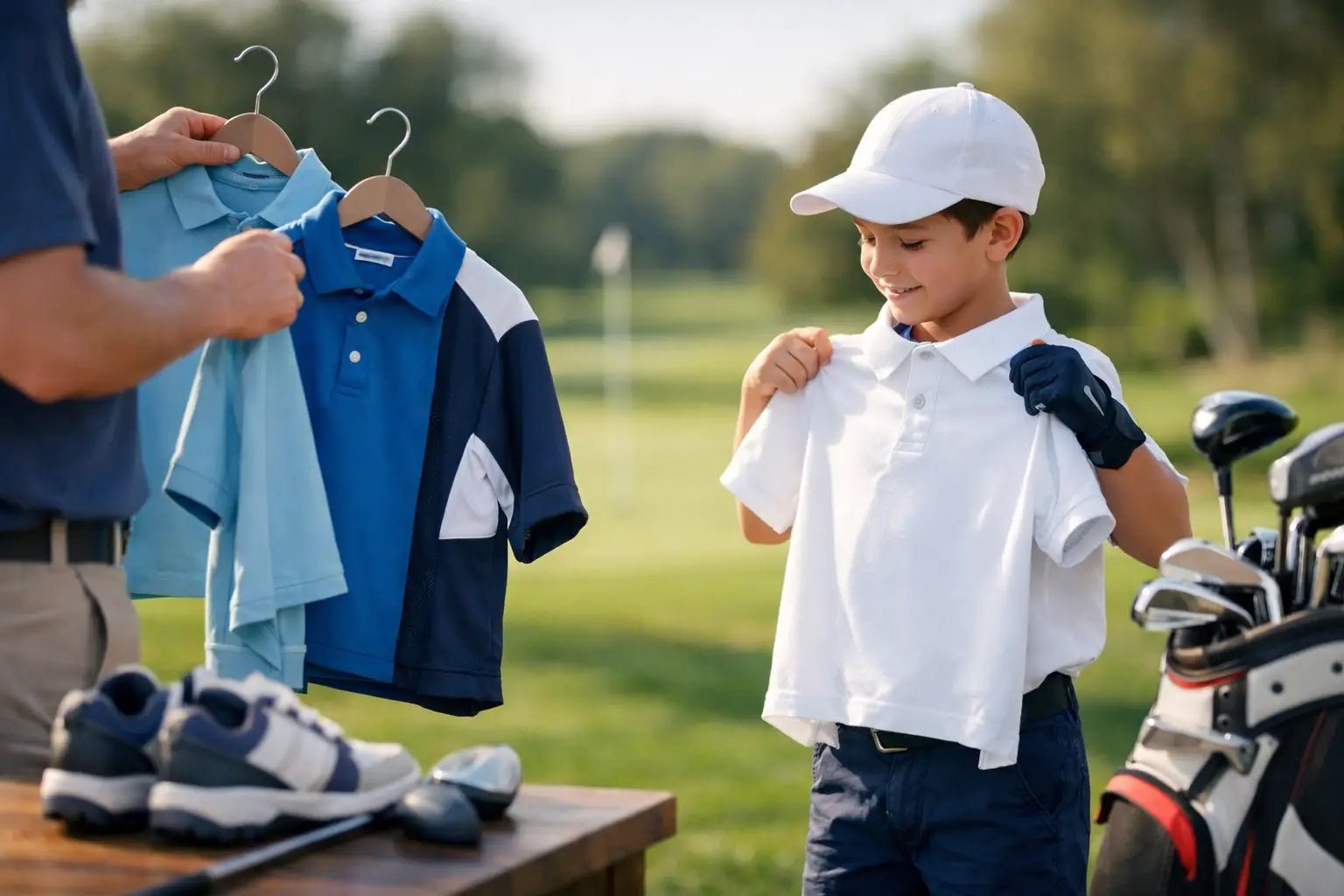
Polos should sit neatly on the shoulder, with enough length to look tidy tucked or untucked depending on the style. If the sleeve is swallowing the upper arm, it is probably too big. Mid layers can afford a touch more space, but the neckline, chest and shoulders still need to feel controlled rather than baggy. If there is excess fabric gathering when they rotate, that is a warning sign.
Bottoms are even more dependent on shape. Junior golfers usually need a secure waist, room through the seat and thigh, and a lower leg that does not flap about. Adjustable waistbands are useful for younger players, especially if they are between builds rather than simply between ages. Shorts should feel easy and athletic, not oversized and long like borrowed kit.
It is also worth remembering that age labels are only a guide. Two children of the same age can need completely different fits. Check measurements where possible and think about build, not just birthday.
Weather matters more than most buyers expect
Buying one complete junior golf outfit rarely solves the full problem. In Britain, golfwear needs to cope with changing conditions, sometimes in the same afternoon. That is why layering beats one heavy piece nearly every time.
For warmer days, a breathable polo and lightweight shorts or trousers are usually enough. For spring and autumn, add a flexible layer that can go on and off without drama. In colder weather, a base layer under a polo with a quarter zip or hoodie over the top often gives better freedom than one thick sweatshirt.
This is also where smart buying saves money. Instead of chasing separate outfits for every forecast, build a small rotation of pieces that work together. A couple of polos, one solid mid layer, one outer layer and two bottoms can cover a lot of golf. If the colours and styling are easy to mix, the wardrobe feels bigger without becoming expensive.
Let them have a say
Junior golfwear has to pass the wear test, not just the checkout test. If a child feels good in what they are wearing, it changes the whole mood. They stand a bit taller. They are less self-conscious. They feel more like a golfer, not a kid dressed up as one.
That is why personal style should not be treated as a bonus. Some juniors love bold prints and brighter colour. Others want cleaner monochrome looks that feel sportier and more grown up. Neither is wrong. The point is to choose clothing that reflects who they are, because confidence shows up in performance as much as comfort does.
Brands like Caddie Couture understand that golfwear does not need to look stuck in the past to work properly on the course. For juniors especially, that blend of performance and personality can be the difference between clothing they tolerate and clothing they are excited to wear.
When to spend more and when to keep it simple
Not every piece needs to be premium. If your child is in a growth spurt, spending heavily on basics they may outgrow in months is not always the smartest call. Core polos, simple bottoms and easy layering pieces can be bought with value in mind, as long as the fit and fabric are right.
Where it often pays to spend a little more is outerwear and high-use items. A quality mid layer that keeps its shape, moves well and washes clean can earn far more wear than a cheaper option that twists, pills or loses comfort quickly. The same goes for trousers or joggers worn every week.
The right balance depends on the junior golfer. A casual beginner does not need the same wardrobe as a child playing competitions most weekends. Buy for the current stage, not the version of golf you hope arrives next year.
The smartest way to buy junior golfwear
Think in outfits, but shop in building blocks. Start with one or two tops, one dependable bottom and one layer for cooler weather. Make sure each piece works with the others. Then check the details that affect real wear - stretch, softness, easy washing, weather-readiness and whether the fit still looks sharp after a few rounds.
Most of all, avoid buying junior golfwear as if it is only a practical task. Golf is a game of confidence, rhythm and comfort. What a young player wears feeds into all three. Get the fit right, keep the fabrics functional, and choose style with a bit of attitude. They will feel the difference before the scorecard shows it.
The best junior golfwear does not just help them look ready for the course. It helps them want to get back on it.