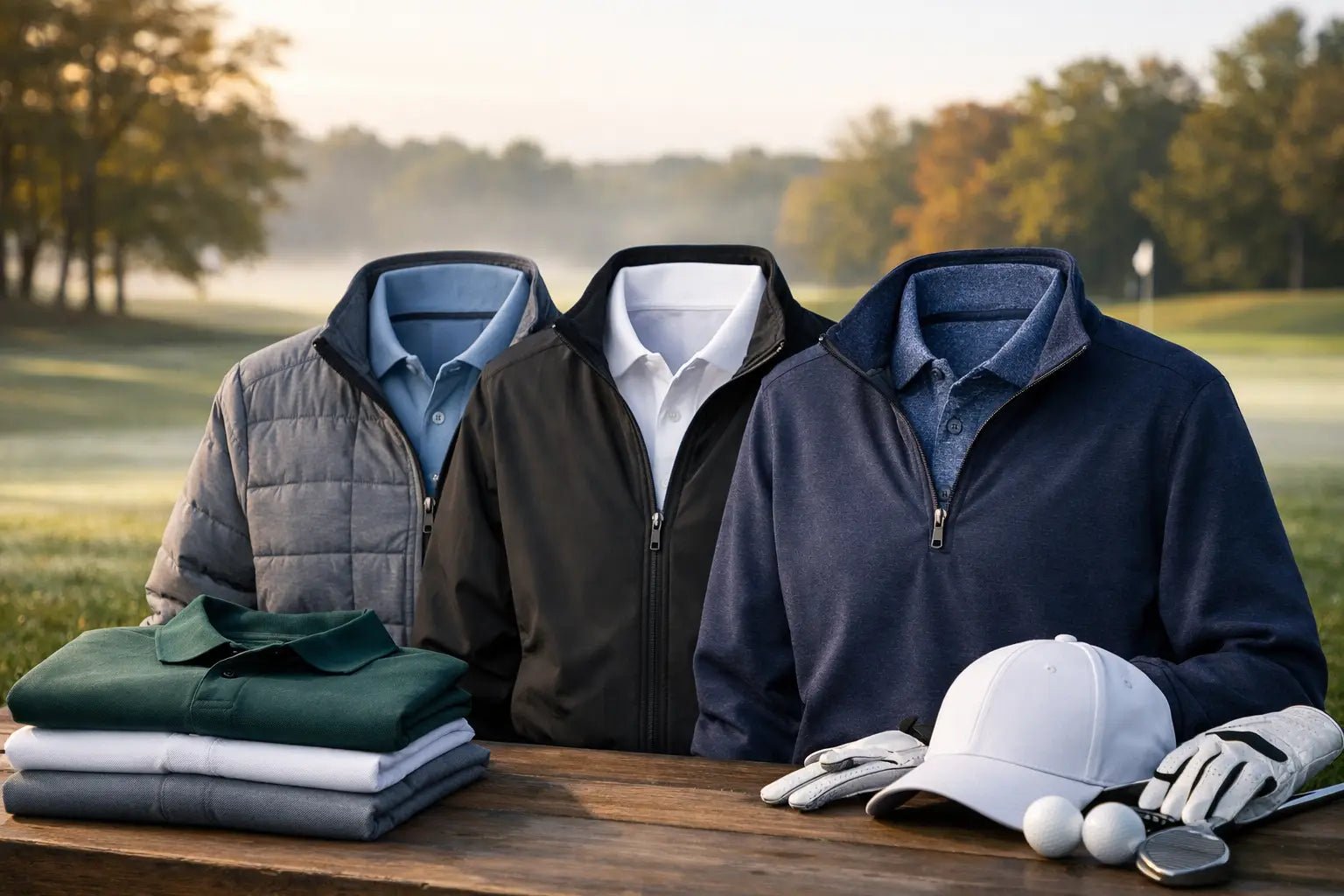


Guide to Performance Golf Fabrics
If your polo looks sharp on the first tee but feels heavy by the back nine, the fabric is doing the talking. A proper guide to performance golf fabrics is not about jargon for the sake of it. It is about knowing why one layer keeps you cool under pressure, why another moves cleanly through your swing, and why some pieces earn a place in your weekly rotation while others stay in the wardrobe.
Golf kit has changed. The old idea that performance wear has to look plain, stiff or forgettable does not hold up any more. The best golf fabrics now balance technical function with a modern silhouette, clean fit and enough presence to stand out for the right reasons.
Why performance golf fabrics matter
Golf asks more from clothing than many people realise. You can start a round in a chill breeze, play through light drizzle, then finish in full sun. Add walking, swinging, layering and hours of wear, and fabric choice stops being a small detail.
Good performance fabric works quietly in the background. It helps regulate temperature, manages moisture, stretches where it should and keeps its shape after repeated wear. That matters whether you are reaching for a lightweight polo in July, a quarter zip in spring, or a wind-resistant outer layer when the forecast looks unreliable.
There is also the style side. Fabric affects drape, structure and finish. It decides whether a piece looks sleek and athletic or bulky and dated. If you want golfwear that performs and looks current, fabric is where that starts.
Guide to performance golf fabrics for every layer
Not every garment needs the same fabric recipe. What works perfectly in a polo may feel wrong in a gilet, and a brilliant outer-shell material could be far too rigid for an all-day mid-layer. The key is matching the fabric to the job.
Polos and base layers
For polos, the priority is usually breathability, softness and stretch. Most strong options use polyester blends, often mixed with elastane. Polyester helps with durability and moisture management, while elastane gives that extra freedom through the shoulders and torso.
This is where sweat-wicking really matters. A fabric that pulls moisture away from the skin helps you stay drier and more comfortable, especially on warm rounds or range sessions. It can also help the garment hold a cleaner look, rather than clinging when conditions get humid.
That said, not all lightweight polos feel premium. Some very thin fabrics can look flat or feel too synthetic. The better versions have enough body to sit well on the frame while still feeling airy. That balance is what separates a smart performance polo from one that feels like gym wear in disguise.
Mid-layers and quarter zips
Mid-layers need a different brief. Here, warmth matters more, but mobility still comes first. A quarter zip should add insulation without restricting your swing or creating bulk under a jacket.
Brushed-back knits, smooth technical jerseys and stretch fleece blends are common here. These fabrics trap a bit more warmth while staying flexible. The best ones feel streamlined rather than heavy, which is exactly what you want for cool mornings and shoulder-season golf.
There is always a trade-off. Thicker fabrics may feel cosier, but if they run too warm you will spend the round adjusting zips and sleeves. Lighter mid-layers are more versatile, especially if you prefer building outfits through layering rather than relying on one heavy piece.
Outerwear, windbreakers and gilets
Outer layers have one main job: protect without getting in the way. Wind-resistant fabrics are especially useful in golf because a sharp breeze can change how a round feels fast, even when temperatures look manageable on paper.
Look for lightweight woven fabrics with a bit of mechanical stretch or added elastane. They should block wind, shrug off a passing shower and still allow movement through the swing. If an outer layer crackles, feels stiff or sits awkwardly at address, it is probably not made for serious wear on the course.
Gilets are a good example of fabric doing precision work. They need core warmth, but the armholes and side panels often rely on stretch materials to stop the garment feeling restrictive. A well-designed gilet gives you coverage where you need it and freedom where you cannot compromise.
The fabric features that actually matter
A lot of product descriptions throw around the same buzzwords, but a few fabric traits genuinely make a difference.
Stretch is non-negotiable. Golf is full of rotation, reach and repetition. Two-way stretch can work well, but four-way stretch gives a more adaptive feel, especially in fitted pieces and active outerwear.
Breathability is just as important. If heat cannot escape, comfort drops quickly. Breathable fabrics help regulate temperature and make layering more effective, because trapped heat has somewhere to go.
Moisture management matters in more conditions than people assume. It is not only for hot weather. Even in cooler months, fabric that handles perspiration properly helps avoid that clammy feeling after a long walk or a pressure stretch of holes.
Recovery is another detail worth noticing. A garment with poor recovery starts to bag at the elbows, lose shape at the hem or look tired too quickly. Better fabrics bounce back and keep a sharper fit after washing and wear.
Finally, there is hand feel. That sounds fashion-led, because it is, but it still counts. If a fabric feels rough, plasticky or cheap, you will notice it every time you put it on. Performance should feel good, not clinical.
What to wear in different conditions
The best guide to performance golf fabrics should answer one practical question: what should you actually wear when the weather changes?
In warm conditions, lighter polyester-elastane blends tend to lead the way. They breathe well, dry quickly and move easily. This is the time for polos, lightweight trousers or joggers, and pieces that feel cool against the skin without becoming see-through or flimsy.
For changeable weather, versatility wins. A breathable polo under a light quarter zip or a windbreaker gives you options without overcommitting. Fabrics that layer smoothly are crucial here. If every piece feels bulky, your outfit starts working against you.
For colder rounds, focus on strategic warmth. You do not always need the thickest possible layer. Often, a moisture-managing base, a flexible insulating mid-layer and a wind-resistant shell perform better than one heavy top. You stay more mobile, and you can adjust as the temperature shifts.
In damp conditions, water resistance is useful, but full waterproofing is not always necessary for every round. A shower-resistant fabric often covers light rain and drizzly starts without the stiffness some fully waterproof garments can bring. It depends on how often you play through poor weather and how much protection you really need.
Style still matters
Technical fabric is only half the story. If the cut is off or the finish looks dated, even high-spec material will not save the piece.
The strongest golfwear now blends performance with intent. Clean lines, confident colour, sharp monochrome options and standout prints all land better when the fabric has enough quality to support them. A bold design on the wrong material can look gimmicky. On the right fabric, it looks considered and modern.
That is where brands with a fashion eye stand apart. Caddie Couture, for example, leans into golfwear that has presence without dropping the technical side. That mix matters for players who want more than generic sportswear with a collar.
How to judge fabric before you buy
You cannot always touch the garment first when shopping online, so read the clues properly. Fabric composition is a start, but not the full answer. A polyester-elastane blend can feel premium or average depending on weight, knit and finish.
Look at how the garment is described in use, not just in theory. Terms like breathable, stretch, lightweight and wind-resistant are helpful if they align with the type of piece. A polo does not need to promise storm-level protection. A windbreaker that says nothing about movement should raise questions.
Fit also changes how fabric performs. A great stretch fabric in the wrong cut will still feel off. If you prefer a cleaner, modern silhouette, look for pieces designed to move with the body rather than sit boxy and loose.
Care matters too. Performance fabrics are generally easy to wash, but they last longer when treated properly. Overheating them in the tumble dryer or using harsh softeners can affect stretch, finish and moisture-wicking ability. If a garment looks good and performs well, it is worth keeping it that way.
The smartest golf wardrobe is not built on labels alone. It is built on knowing what each fabric does, where it works best and how it supports the way you play. Choose pieces that move cleanly, handle the forecast and still look sharp when you step onto the tee. Your clothing should never be the thing holding you back.