

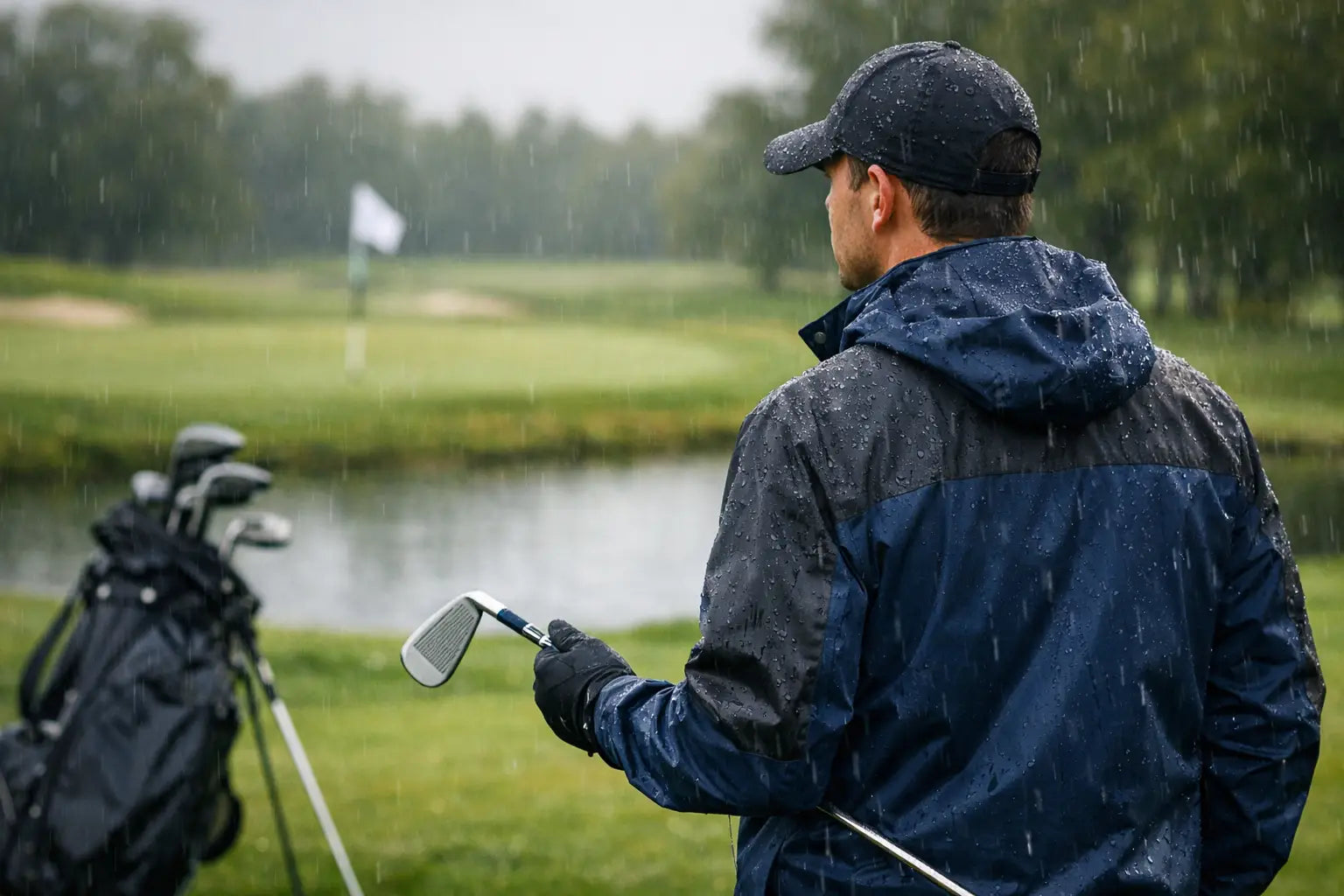
A Guide to Golf Rain Layers That Play Well
A wet forecast does not have to mean a compromised swing, clammy clothes and a round spent watching the sky. This guide to golf rain layers is built for golfers who want to stay dry, move freely and still look like they belong on the first tee. The aim is not to pile on bulk. It is to build a weather-ready look that works through drizzle, downpours and those very British showers that arrive halfway down the fifth.
Start With a Golf Rain Layering System
The strongest rain outfit works as a system. Each piece has a job: manage moisture next to the skin, add warmth where needed, then block rain and wind without restricting your rotation. Get the order wrong and even expensive outerwear can feel sweaty, stiff or distracting.
A useful rule is to dress for the temperature after the rain arrives, not the temperature while you are loading the car. Rain, wind and a damp bag can make a mild day feel distinctly colder by the back nine. Equally, overdressing for a warm shower leaves you stripping layers off after three holes.
Your base layer should sit close without pulling across the shoulders or bunching beneath a polo. Choose a lightweight, quick-drying technical fabric rather than cotton. Cotton holds moisture, cools against the skin and takes its time to dry. A performance tee, long-sleeve base layer or breathable polo keeps the first layer comfortable when the round gets humid.
Over that, add warmth only when conditions call for it. A golf hoodie, quarter zip or gilet gives you flexibility without turning your upper body into a padded tunnel. The best mid-layers have stretch through the chest, back and sleeves, so there is no fight against the fabric at the top of the backswing.
The Outer Shell Makes or Breaks the Round
A golf rain jacket is not simply a waterproof coat with a logo on it. It needs to protect you while allowing a full swing, a proper walk and easy access to pockets, tees and scorecard. That means looking beyond whether the jacket is labelled waterproof.
Waterproof is different from water-resistant
Water-resistant fabric is useful for a light shower or morning dew. It may have a water-repellent finish that causes droplets to bead and roll away, but it will eventually give in under sustained rain. A waterproof shell is designed for more serious weather, usually using a protective membrane or coating and sealed construction.
For regular winter golf or a forecast full of rain, choose waterproof rather than water-resistant. Look for taped seams in particular. Needle holes at the seams are an easy route for water to enter, so taped seams are one of the details that separate a proper rain layer from a jacket that merely looks the part.
Breathability matters just as much. Walking 18 holes, carrying a bag or pushing a trolley builds heat quickly. If moisture cannot escape, you may stay dry from rain but feel damp from the inside. The right shell lets heat and perspiration move out while stopping water getting in.
Prioritise swing room, not excess fabric
A jacket can be waterproof and still be wrong for golf. Test the fit by bringing your arms across your chest and lifting them as if you are reaching the top of your swing. The shoulders should move with you. The back should not pull tight, and the cuffs should not slide halfway up your forearms.
A slightly shaped fit usually performs better than an oversized one because loose fabric can catch in the wind and distract at address. But there is a trade-off: if you plan to wear a hoodie or heavier quarter zip beneath it, leave enough room for that extra layer. Try your intended combination together, not each item in isolation.
A higher collar is valuable in wind-driven rain, especially on exposed courses. An adjustable cuff and hem help keep water out without creating a fussy, over-engineered feel. A hood is useful off the course and between holes, though some golfers prefer a clean collar while playing because a hood can alter peripheral vision or bunch under a cap.
Choose Mid-Layers for the Forecast, Not the Season
The same rain shell can work from April to November. What changes is what sits underneath it.
On a mild, wet day, a performance polo beneath a lightweight waterproof jacket is often enough. You stay protected without trapping heat. This is the combination for soft rain, humid afternoons and fast-paced summer rounds when you know you will warm up walking.
When there is a colder edge to the weather, introduce a quarter zip or slim golf hoodie. It creates insulation while keeping the arms free. A gilet is another smart option when your core needs warmth but you do not want extra fabric around your elbows and shoulders. It is particularly effective under a shell on breezy, showery days.
For winter rain, a technical base layer, warm mid-layer and fully waterproof outer shell is the dependable three-piece. Avoid stacking thick cotton sweatshirts under a jacket. They absorb moisture and can make your movement feel heavy. Modern golf layers should earn their place through warmth, stretch or weather protection. Ideally, all three.
Do Not Ignore Your Lower Half
Rain has a way of finding the gap between a good jacket and ordinary trousers. If the course is properly wet, waterproof overtrousers are worth having in the bag. They are less glamorous than a sharp shell, but dry legs make a longer round far more enjoyable.
Look for a design that can be pulled on without removing your golf shoes, or at least one with ankle zips that make the process less of a changing-room performance in the car park. A trim cut is useful, provided it does not tug at the knees when you crouch to read a putt.
Your shoes, socks and gloves matter too. Waterproof footwear is the foundation, especially if you play early when fairways are saturated. Pack a spare glove in a sealed pocket or pouch. A soaked glove can turn a secure grip into a guessing game, and no jacket can solve that problem.
Build a Rain-Ready Golf Bag
The weather can shift quickly, so keep the pieces that make a real difference close at hand. A prepared bag does not need to be crammed with every garment you own. It needs a few purposeful options.
- A lightweight waterproof golf jacket for showers and wind
- A compact mid-layer for a sudden temperature drop
- Waterproof overtrousers when the forecast looks relentless
- A spare glove, dry towel and waterproof cap or bucket hat
Stay Sharp When the Weather Turns
Golf rainwear has traditionally been treated as emergency kit: practical, plain and forgotten the moment the sun returns. That is no longer the only option. A great rain layer should bring performance to the round and presence to the tee box.
Colour and pattern can work brilliantly in wet weather, when grey skies make the course feel flat. A strong monochrome shell, a confident print beneath a clean jacket or a colour-pop cap can lift the whole look without compromising function. Caddie Couture is built around that balance: golf apparel with technical intent and a point of view.
There is still a case for restraint. If your outer shell makes the statement, keep the layers beneath clean and let the jacket carry the look. If you prefer a quieter waterproof, use your polo, quarter zip or accessories to add character. The best outfit is the one you will actually wear with confidence, not the one that ticks every trend box.
Rain changes pace, footing and comfort, but it does not have to change how you play. Pack layers that move with your swing, select protection that matches the forecast, and give yourself one less excuse to head for the clubhouse early.