

A Guide to Golf Dress Codes That Feels Like You
Turn up to a private members' club in denim and trainers, and the starter may have a quiet word. Turn up in a head-to-toe traditional kit that does not feel like you, and your confidence can take a hit before the first tee. This guide to golf dress codes is about getting the balance right: respecting the course, dressing for the conditions and still bringing some personality to the fairway.
Golf style has moved on. Most clubs still expect a polished look, but polished no longer has to mean plain. Performance fabrics, sharper cuts and statement patterns have made it easier to look course-ready without disappearing into a sea of beige trousers and navy polos.
Guide to golf dress codes: start with the club
There is no single UK golf dress code. A relaxed municipal course, a championship venue and a traditional private club can have very different expectations. The fastest way to avoid a wardrobe misread is to check the club's website or call the pro shop before you travel. This matters most for visitor rounds, society days and any course with a formal dining area.
As a general rule, clubs want golfers to look neat, practical and recognisably dressed for golf. Collared shirts or smart mock-neck tops are widely accepted. Tailored trousers, shorts or golf skorts are usually safe. Golf shoes are expected on the course, although some modern venues allow clean, purpose-built spikeless shoes.
The grey areas are where individual club rules take over. Some clubs welcome hoodies; others reserve them for the driving range or do not permit them at all. Some accept tailored joggers, while others still require conventional trousers. Cargo pockets, denim, gym leggings, football shirts and visible vest tops are common no-go items, particularly at more formal clubs.
If the rules are unclear, dress one level smarter than you think you need to. A performance polo, tailored bottoms and clean golf shoes will work almost everywhere.
The foundation: a proper golf top
For men, the classic answer is a polo shirt. It remains the easiest way to meet dress expectations, and it earns its place because it works. A good performance polo moves with your swing, handles warm rounds better than cotton and keeps its shape from the first tee to the post-round pint.
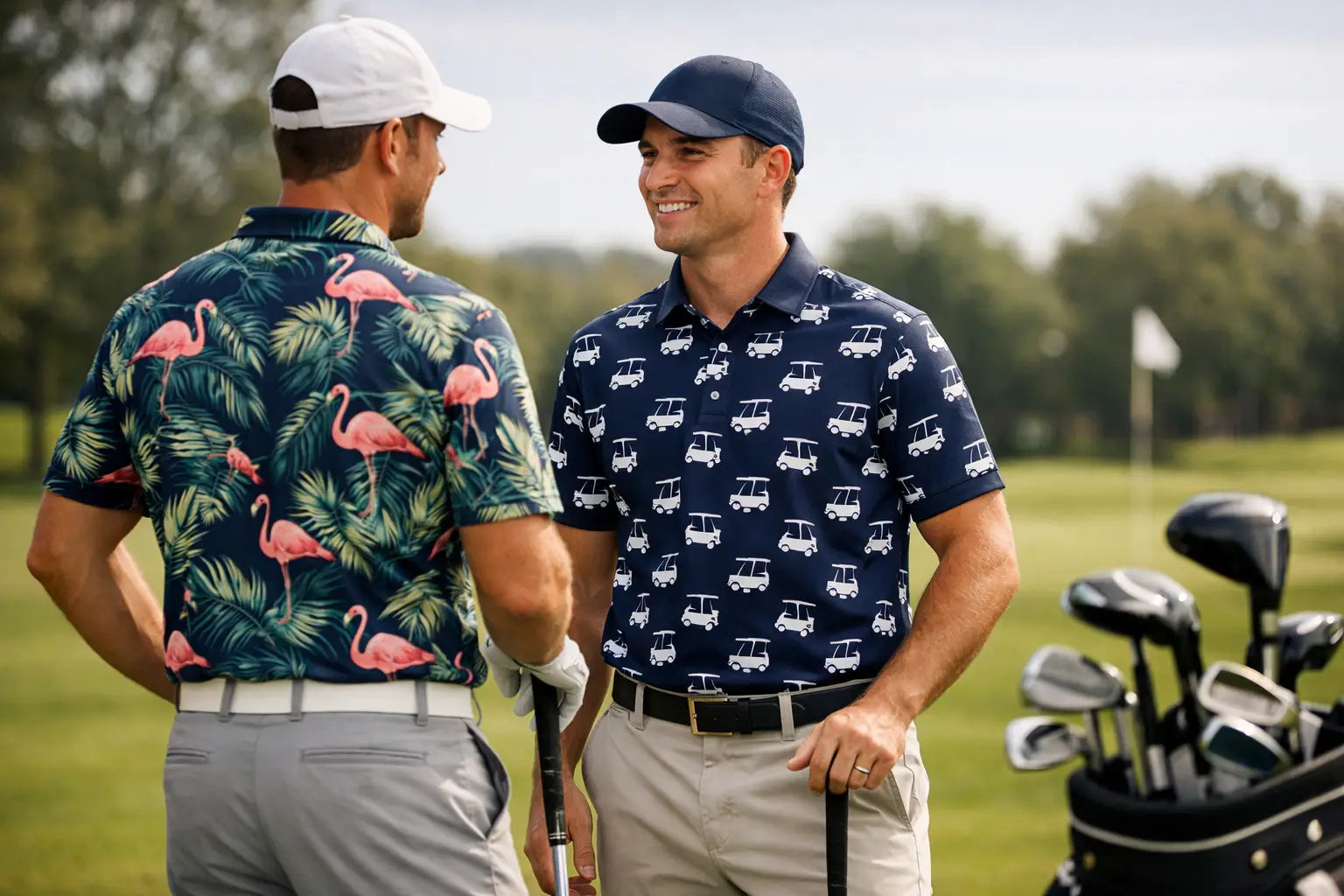
That does not mean every polo needs to be safe. Bold prints, colour blocking and a clean monochrome look can all sit comfortably within club rules when the fit is right. Keep it tidy through the shoulders and avoid anything so oversized that it looks more like beachwear than golf apparel.
For women, a collared polo is a dependable choice, but it is not the only option. Mock-neck tops, sleeveless collared styles and fitted performance layers are accepted at many clubs. The key is coverage and finish. A top designed for golf should let you rotate freely while looking intentional, rather than like an afterthought from a gym wardrobe.
Tucking in is another club-by-club question. Traditional venues may expect shirts to be tucked into trousers or shorts. At more relaxed courses, a designed-to-be-worn-out polo can look just as sharp. If you are unsure, tuck it in and use a belt to pull the outfit together.
When a golf hoodie works
Golf hoodies are now part of modern course style, especially in autumn, winter and early spring. They offer warmth without the restrictive feel of an old-school knit, and they suit a more contemporary look. Still, they are not universal. Check before wearing one to a prestigious club or a formal competition.
When hoodies are allowed, choose one made specifically for golf. A streamlined fit, technical stretch and a clean finish look far more considered than a heavy casual sweatshirt. Pair it with tailored trousers or smart golf joggers, not baggy bottoms, and the result feels current rather than careless.
Trousers, shorts and skorts: where fit matters most
Your lower half does a lot of work in golf. You need room to squat, walk hills and make a full turn, but you also need a silhouette that does not look sloppy. Tailored golf trousers are the safest choice for men and women at any club. They are especially useful for visitor rounds, colder weather and settings where shorts may not be permitted.
Golf shorts are broadly accepted in summer, provided they are tailored and a sensible length. Think smart, athletic and above the knee or around knee length, depending on the cut. Board shorts, gym shorts and anything overly short are unlikely to pass at traditional venues.
For women, golf skorts, tailored shorts and trousers are all practical options. A skort gives the look of a skirt with the coverage needed for a full round, while trousers provide a sharper option when the weather turns. Leggings can be a tricky one. Some clubs allow them under a skort or dress in cold conditions, but leggings worn alone may not meet the dress code.
Joggers are another modern option with a caveat. Golf-specific joggers in a tapered, structured fabric can look excellent at relaxed clubs and practice facilities. They may not be appropriate at a club with a strict traditional policy. Save the guesswork by checking first.
Layers should look sharp, not bulky
British golf weather does not reward optimism. Even a sunny forecast can bring wind, drizzle and a sudden temperature drop across 18 holes. The best golf outfit is built in layers you can remove, carry and put back on without disrupting your swing.
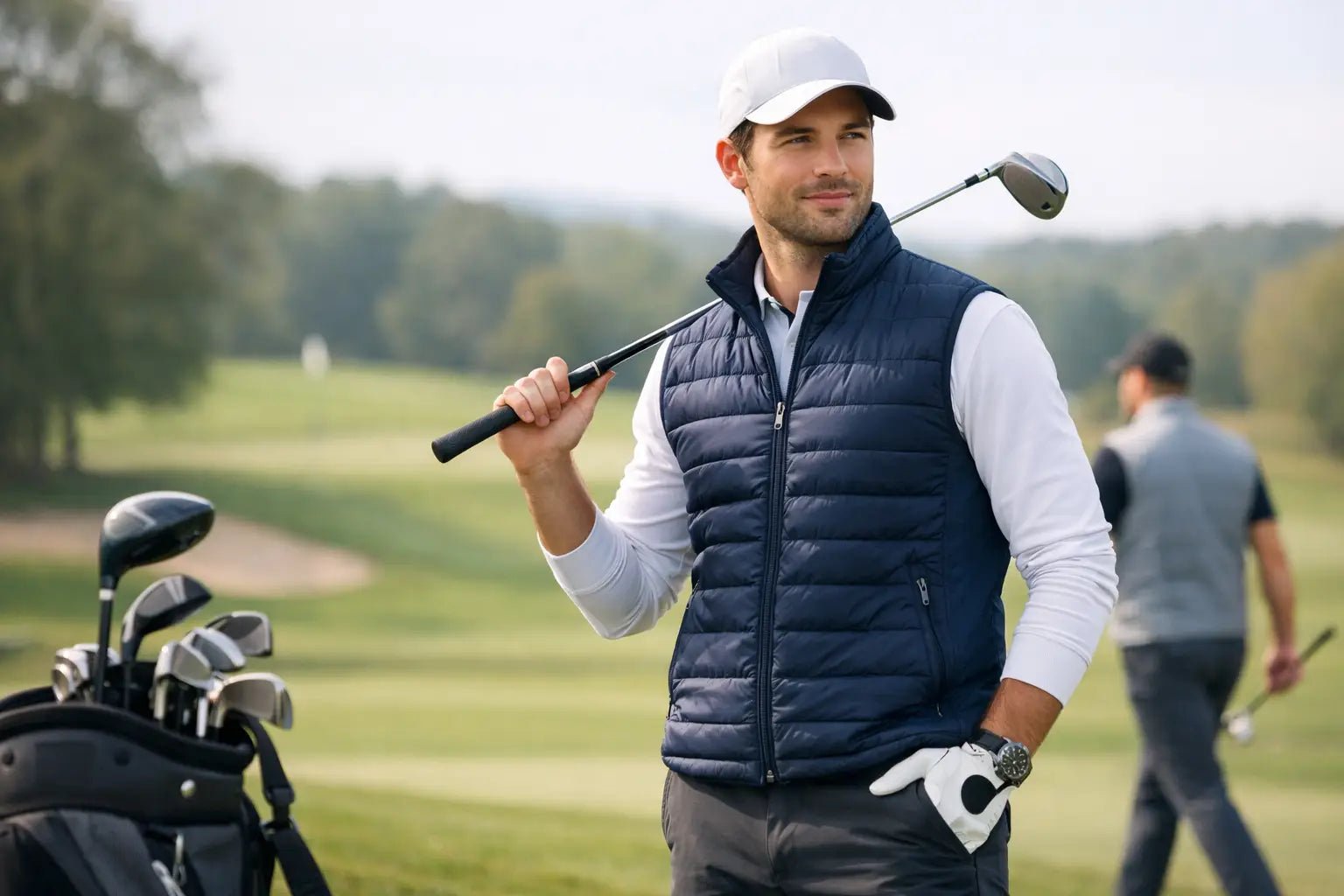
A quarter zip is the reliable middle ground. It gives warmth through the chest and arms while leaving enough freedom for a smooth takeaway. A gilet works well when you want core warmth without adding bulk to your sleeves. For exposed courses or wet days, a lightweight windbreaker or waterproof outer layer is worth having in the bag.
Keep the layers proportionate. A fitted polo under a streamlined quarter zip looks intentional; piling an oversized hoodie beneath a heavy jacket can feel restrictive and untidy. It also makes your swing harder than it needs to be. Technical materials are the smart call here: stretch, breathability and quick-drying performance matter more than a thick fabric that simply feels warm in the car park.
Shoes, socks and the small details
Golf shoes are not just a dress-code formality. They provide traction through the swing and stability on wet grass, which makes them a performance decision as well as a style one. Spiked shoes tend to offer the strongest grip in winter or on soft ground. Spikeless shoes are versatile, lighter and often better if you are heading straight from the course to the clubhouse.
Clean shoes matter. A smart outfit loses impact when the footwear is muddy, scuffed or clearly not designed for golf. Check whether the club requires soft spikes only, as metal spikes are almost universally off limits.
Socks should be practical and understated, unless your course is relaxed enough for a flash of colour. In summer, ankle socks work well with shorts. In colder months, longer socks beneath trousers add comfort without becoming the centre of attention.
Accessories are where you can add personality without fighting the club's rules. A statement glove, distinctive towel, sharp cap or considered ball marker can bring a look together. Just avoid wearing a cap indoors if the clubhouse has a traditional etiquette policy.
What to wear for different golf occasions
A casual nine holes with friends gives you more freedom than a corporate golf day. For a relaxed local course, a patterned polo, golf joggers or tailored shorts, and clean spikeless shoes are usually a strong combination. You can lean into colour and modern silhouettes without overthinking it.
For a private club visit, choose a collared polo, tailored trousers and conventional golf shoes. Bring a quarter zip rather than relying on a hoodie, and pack a waterproof layer in case the weather changes. This is not about muting your style. A standout print or a crisp monochrome fit still works - just make sure the cut and finish are immaculate.
For competitions and charity days, check the event rules as well as the club's policy. Some organisers set team colours, prohibit certain logos or ask for smarter clothing at the meal afterwards. A spare polo and a dry layer in the car can save the day if the forecast or format changes.
Dress for your game, not someone else's idea of golf
The best golf outfit should let you focus on the next shot, not on a waistband that pinches or a jacket that catches at the top of your backswing. Dress codes set a framework. Your job is to make that framework your own with better fit, better fabrics and a look that has some edge.
At Caddie Couture, the point is simple: golf attire can perform under pressure and still make an impression. Check the club rules, prepare for the weather, then wear the piece that makes you stand taller on the first tee. Golf has enough old rules already. Your style does not need to be one of them.