

Article: Golf Jogger Comfort That Holds Up All Round
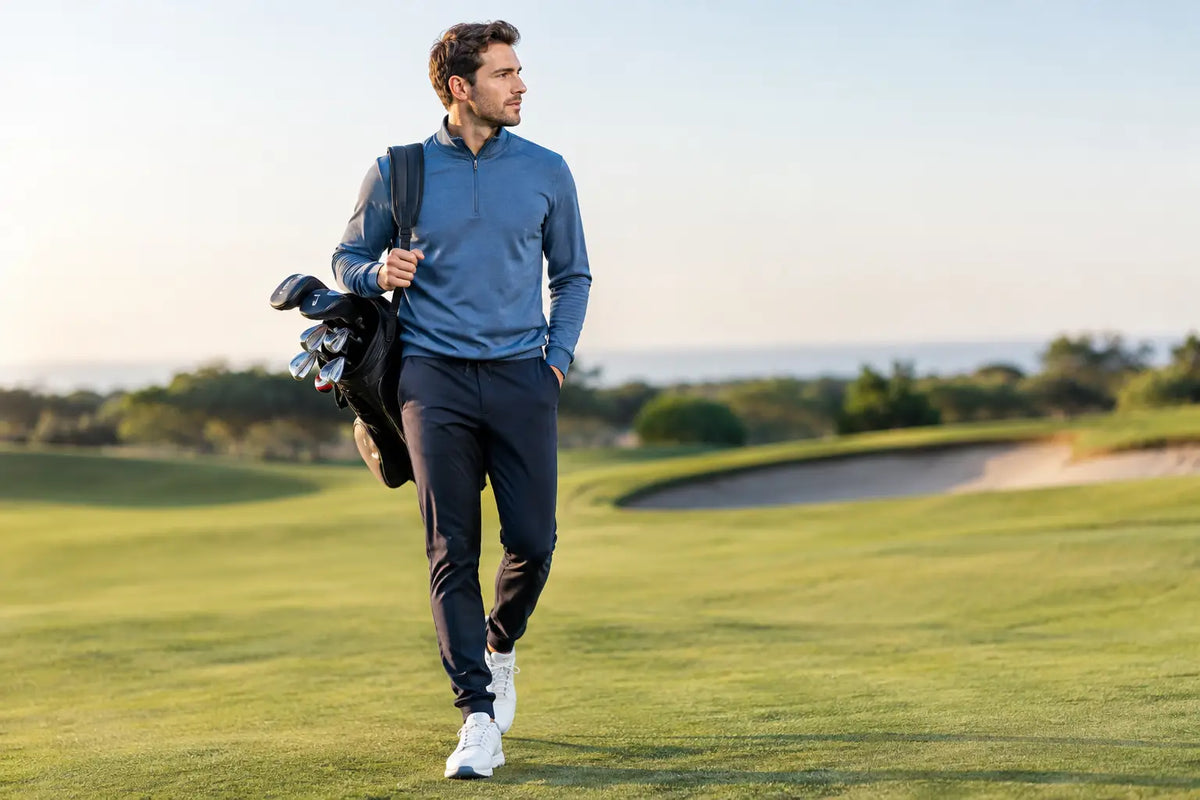
Golf Jogger Comfort That Holds Up All Round
Comfort should not stop at the first tee
A pair of trousers can look sharp in the mirror and still ruin a round by the seventh hole. A waistband that digs in over a putt, a tight knee during a crouch to read the green, fabric that clings after a light shower - these details become hard to ignore when you are walking 18 holes.
That is why golf jogger comfort is about far more than a soft feel. The right pair needs to move naturally through the swing, sit cleanly from tee box to clubhouse and hold its shape when the weather changes its mind. Modern golf style should feel effortless, not restrictive.
For players who have moved on from stiff, traditional trousers, joggers offer a more current silhouette without giving up course-ready performance. The best versions bring together stretch, structure and a fit that looks intentional rather than overly casual.
The fabric does the hard work
Comfort starts with what is against your skin. Golf joggers need fabric that has enough technical performance for the course but does not feel overly synthetic or noisy. A smooth, lightweight performance blend is often the sweet spot for spring and summer rounds. It lets air circulate, dries quickly and avoids that heavy, clammy feeling that can appear after a long walk in warm conditions.
Stretch matters just as much, but there is a difference between fabric that stretches and fabric that recovers. A jogger with four-way stretch gives you freedom through the hips, thighs and knees as you rotate, bend and walk. Recovery is what stops the fabric from becoming baggy by the back nine. You want the same clean line at the end of the round as you had on the first tee.
For cooler months, a slightly heavier fabric earns its place. The aim is warmth without bulk. Thick, brushed joggers can be ideal for winter range sessions or casual wear, but may feel too warm during a competitive round where you are constantly walking. For golf, look for a midweight fabric that layers easily under a windbreaker or gilet.
Breathability beats bulk
British golf rarely sticks to one forecast. You might start under a grey sky, play through a bright spell and finish in a brisk crosswind. Breathable joggers give you more control over those shifts than heavy trousers do. They are especially useful when paired with a quarter zip or lightweight outer layer, allowing you to adjust the top half without feeling overheated below.
If you tend to play links courses or early-morning tee times, consider how fast the material dries. Damp grass, a sudden shower and wet seats in the buggy are all part of the game. Quick-drying fabric keeps minor weather moments from becoming an all-day annoyance.
A waistband should stay put, not fight back
The waistband is where good joggers separate themselves from everyday ones. It needs to feel secure enough that you are not pulling your trousers up between shots, while remaining flexible enough for a full turn through the ball.
An elasticated waistband can be a major win for comfort, particularly on walking rounds, during a long drive to the course or after a clubhouse lunch. The key is a refined finish. A bulky drawcord, over-tight elastic or obvious gathered fabric can make joggers look more like gym wear than golf apparel.
A flatter waistband with discreet adjustability creates a cleaner result. It works with a tucked polo when you want a more polished look, but still gives you the relaxed comfort that made you choose joggers in the first place. It also helps when your fit preference changes between a base layer in November and a lightweight polo in July.
Do not overlook the rise
Rise is the distance from the crotch seam to the waistband, and it has a bigger effect on comfort than most golfers realise. Too low, and the waistband can pull down or feel restrictive as you address the ball. Too high, and the fit can bunch when you bend or sit.
A balanced mid-rise tends to work for most players. It sits naturally at the waist, leaves room for rotation and keeps the jogger looking neat with both polos and hoodies. If you have stronger thighs or prefer a roomier fit, do not simply size up straight away. Check whether the cut offers extra space through the seat and upper leg before moving to a larger waist.
The right taper looks modern and moves better
The tapered leg is the visual signature of a great golf jogger. It provides room where your body needs it - around the seat and thigh - then narrows towards the ankle for a cleaner, more athletic shape. It is a confident alternative to the loose, shapeless trousers that can look dated on the fairway.
But a taper should never feel like compression. If the calf is squeezed or the cuff rides too high as you walk, the fit is working against you. The lower leg should follow your shape without gripping it. This is especially important if you wear higher socks in colder weather or prefer chunkier golf shoes.
Cuffed ankles are practical as well as stylish. They stop excess fabric from catching on wet grass and keep the silhouette tidy above the shoe. A minimal cuff is usually the most versatile option. It gives you a modern sportswear edge while staying smart enough for courses with a more traditional dress expectation.
Pockets need to be useful, not just present
Golf joggers still need to carry the essentials. A tee, ball marker, scorecard, glove and a few spare balls all need a home. Shallow pockets might preserve a sleek profile, but they are frustrating when a ball keeps working its way out as you walk.
Well-positioned side pockets are the foundation. A secure rear pocket can be useful for a glove or scorecard, while a subtle zip pocket is ideal for keys, a phone or valuables when travelling to and from the course. The best pocket layout keeps items stable without adding distracting bulk around the hips.
There is a trade-off here. The more pockets and zips you add, the more technical the jogger can begin to look. If your style leans minimal, choose clean lines with just one discreet secure pocket. If you regularly walk and prefer to keep everything close, extra storage may be worth it.
Fit for your round, not somebody else’s
There is no single best golf jogger fit because the best fit depends on how you play. A golfer who walks every hole, carries a bag and plays through mixed weather needs mobility and durability above all else. Someone who plays a quick twilight nine after work may place equal value on an outfit that moves easily from course to dinner.
Start with your usual waist size, then judge the fit in motion. Stand over an imaginary putt. Take a practice backswing. Sit down. Lift one knee as if stepping into a buggy. If the joggers pinch, pull at the thighs or expose too much ankle, they will not become more comfortable after four hours on the course.
Length is personal, but the finish should be deliberate. A cuff resting just above the shoe is generally the cleanest look. Too much pooling at the ankle loses the sharpness of the jogger silhouette, while an overly cropped fit can look accidental unless that is clearly the intended style.
Style should give you confidence on the tee
Comfort is physical, but it is mental too. When you feel good in what you are wearing, you arrive at the first tee with more confidence. That does not mean every outfit needs to be loud. A monochrome jogger paired with a statement polo can create minimal look, maximum impact. Equally, a bolder pattern up top works best when the trouser fit is crisp and understated.
Colour choice has practical value as well. Darker joggers are forgiving on damp days and work across more of the year. Lighter tones bring a fresh summer feel but need a little more confidence around muddy paths and wet grass. Neither is wrong - it comes down to your course, your conditions and how you want to show up.
Caddie Couture approaches golf apparel with that balance in mind: performance pieces that feel ready for the round, with enough personality to stand apart from standard-issue clubwear.
Make comfort last beyond the first wear
Even high-performance fabric needs the right care. Wash joggers inside out on a cool cycle, avoid heavy fabric softener and let them air dry where possible. High heat can affect stretch fibres over time, leaving the fit less responsive and the fabric less comfortable.
Most importantly, do not save your best-fitting pair for a perfect forecast. The real test of golf jogger comfort is a full round: uneven lies, long walks, shifting temperatures and the occasional frustrating search in the rough. Find a pair that handles all of that while still looking sharp at the 18th, and you have found a proper course essential.