
Golf Gilet for Layering Through Every Round
The first tee can feel mild, the turn can bring a crosswind, and the final few holes can turn properly sharp. That is exactly where a golf gilet for layering earns its place. It adds warmth where you need it, keeps your arms free to swing, and gives your outfit a cleaner, more intentional finish than simply piling on another jacket.
For golfers who want performance without defaulting to the same safe quarter zip every weekend, a gilet is one of the hardest-working pieces in the bag. The right one is not an afterthought for cold days. It is a course-ready layer built for movement, changing conditions and maximum impact.
Why a golf gilet works so well for layering
Golf is a stop-start sport. You might walk briskly between shots, wait on a tee, stand exposed on a green, then make a full shoulder turn with a driver in hand. Full sleeves can feel restrictive or overly warm when the temperature shifts. A gilet protects your core while leaving your arms clear.
That balance matters. Keeping your torso warm helps you stay comfortable and loose, yet a sleeveless construction means there is less fabric bunching around the shoulders, elbows and wrists. When you are trying to commit to a swing, that freedom is not a small detail.
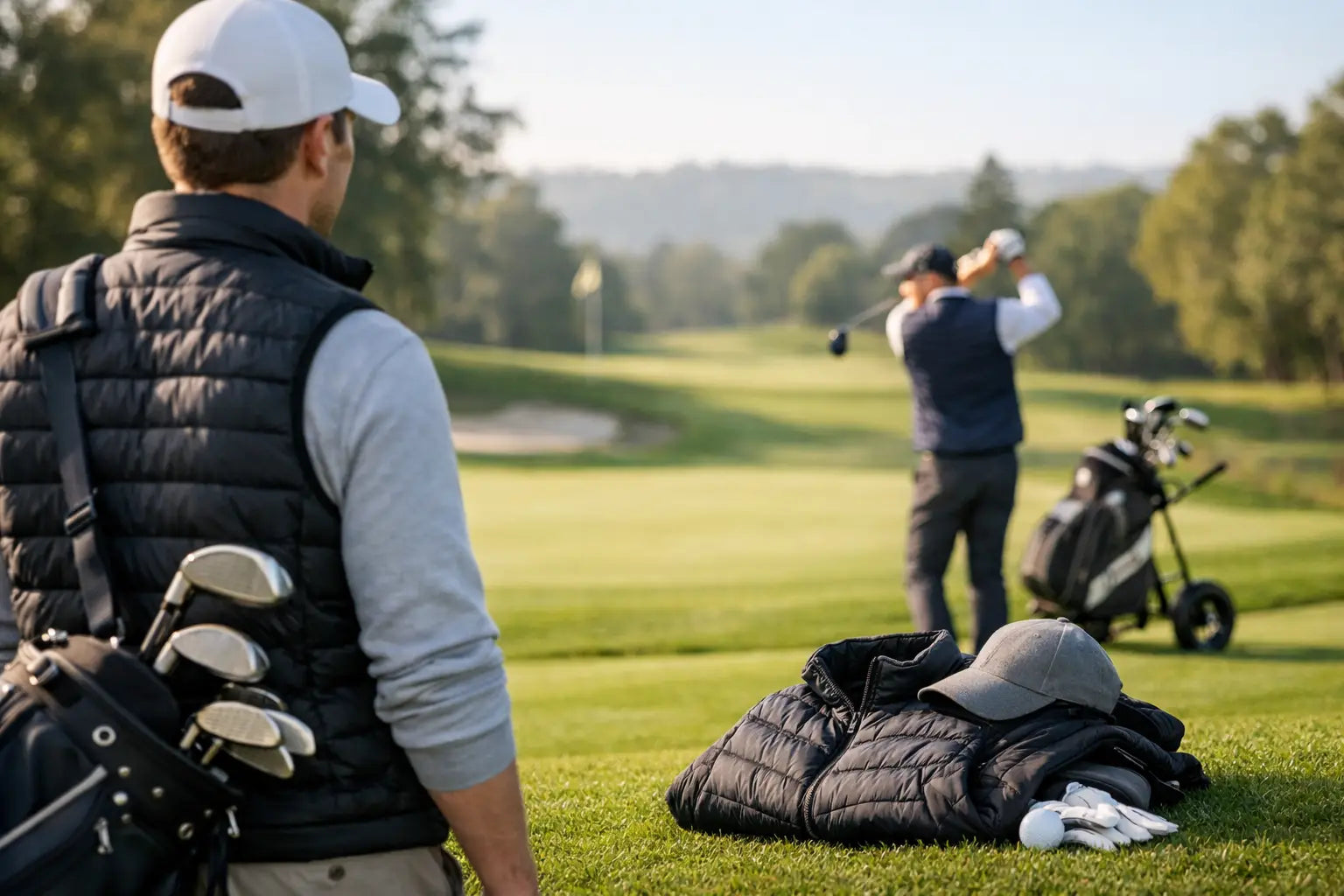
A gilet also brings more flexibility to your wardrobe. Wear it over a performance polo when the morning is cool but dry. Add it over a long-sleeve base layer for a breezy autumn round. On colder days, place it beneath a windbreaker or rain jacket for extra insulation without turning your outfit into a bulky mess.
The key is to think in layers that can be added or removed quickly. British golf weather rarely commits to one forecast, so your clothing should not either.
Start with the base layer, not the outer layer
A strong layering system starts closest to the skin. If the first layer holds sweat, the rest of your outfit has to work harder. Choose a breathable performance polo or fitted base layer that moves moisture away from the body and feels smooth under other garments.
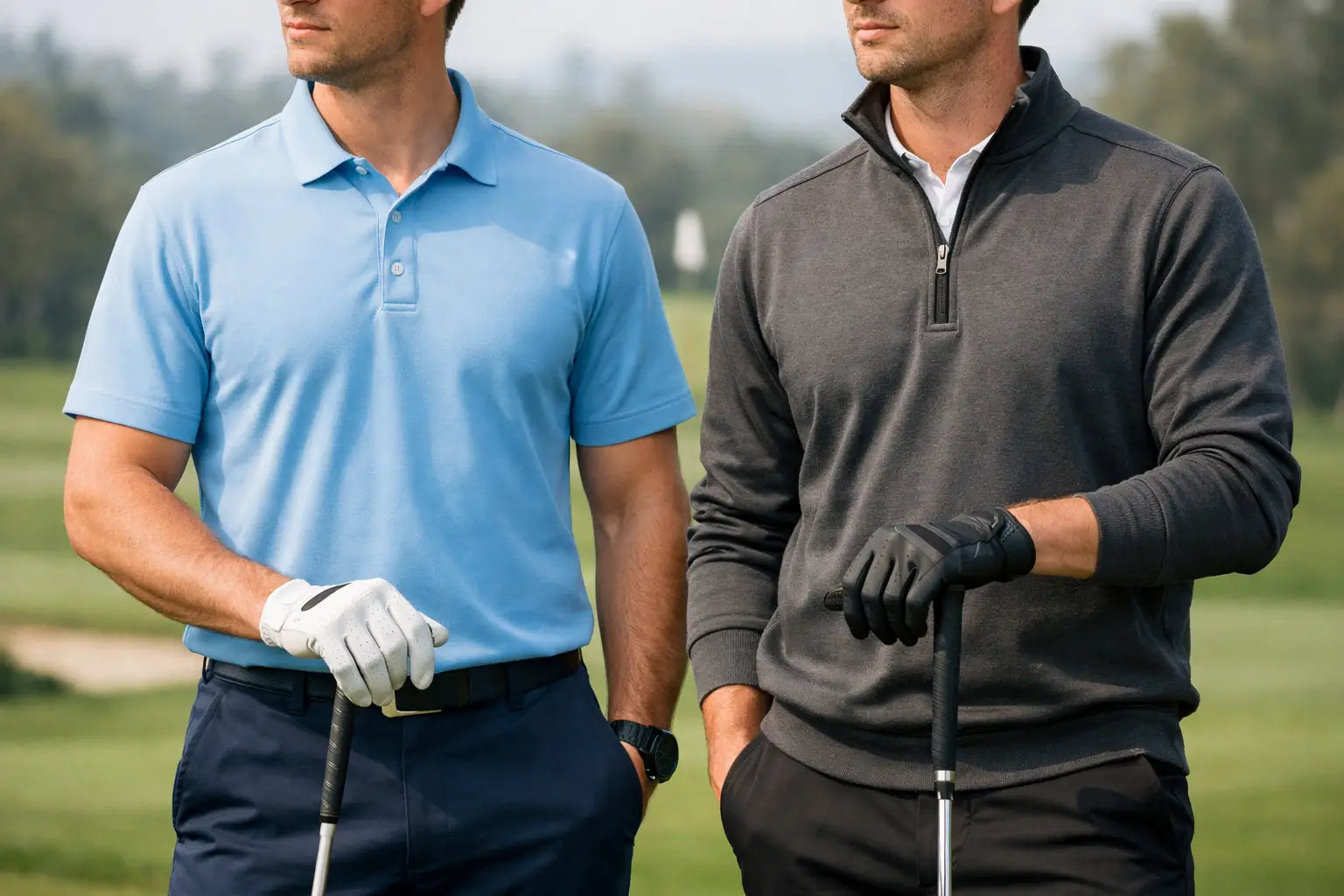
For a mild day, a short-sleeve polo beneath a gilet is the cleanest combination. It looks sharp, gives your look contrast, and offers enough warmth for a cool breeze or early tee time. This is the go-to setup for late spring, early autumn and those summer mornings that never quite warm up.
When the temperature drops, switch to a long-sleeve performance top or lightweight golf hoodie underneath. Avoid anything excessively thick. The purpose of a golf gilet is to build warmth without losing shape, so a heavy cotton sweatshirt can make the whole outfit feel cumbersome and trap moisture once you start walking.
Fit matters here. Your base layer should sit close enough to avoid folds under the gilet, but never feel tight across the chest, back or shoulders. Golf clothing has to look good at the clubhouse and disappear when you address the ball.
The polo and gilet combination
This pairing is modern golf dressing at its most reliable. A plain or monochrome gilet over a bolder patterned polo lets the print do the talking without overwhelming the outfit. Alternatively, pair a statement gilet with a crisp, understated polo for a more controlled look.
The aim is contrast, not chaos. If your polo has strong colour or pattern, choose a gilet that picks out one shade from it. If the polo is minimal, use the gilet to introduce personality. Caddie Couture's approach to golf style has always been clear: clean lines, considered colour and enough confidence to stand out without looking like you are wearing a costume.
Choose warmth without the bulk
Not every gilet is designed for the same round. A lightly insulated style is ideal when the temperature is cool and dry, especially if you tend to feel the cold while waiting between shots. A more lightweight, stretch-led gilet works better for active rounds when you are walking 18 holes and expect to warm up quickly.
The trade-off is straightforward. More insulation provides greater warmth but can feel excessive in mild weather. Less insulation gives broader year-round use but may need a stronger layer beneath it in winter. One do-it-all gilet can work, but golfers who play through every season may get more value from two options: a lightweight layer for spring and summer, plus an insulated version for autumn and winter.
Look for fabric that offers stretch through the upper back and sides. That is where a gilet either performs or gets left in the wardrobe. If it pulls across your shoulder blades during the takeaway or rides up through impact, it is not doing its job.
A slightly longer back can also make a difference when you are bending to read putts or retrieve a ball. It keeps the layer sitting neatly rather than creeping upwards. Small construction details create the difference between apparel that merely looks like golfwear and apparel that feels designed for the round.
Build outfits for real British conditions
A gilet is at its best when it has a clear role in your outfit. On a dry, cool morning, wear it over a polo and let it be the outer layer. If rain is likely, use it as a warming middle layer under a waterproof jacket. The gilet gives your core insulation, while the shell handles wind and showers.
For windy days, pay attention to the fabric rather than assuming padding is enough. Wind can cut through lighter materials fast, particularly on exposed links and hilltop courses. A wind-resistant outer fabric helps retain warmth, but it still needs breathability. Otherwise, you can feel too warm after a few holes and clammy by the back nine.
On frosty winter mornings, a performance base layer, long-sleeve polo or lightweight hoodie, and insulated gilet is a strong starting point. Carry a waterproof shell in your bag rather than wearing it from the first tee if conditions are dry. This gives you options without restricting movement before you need the protection.
Do not overlook the lower half either. A gilet paired with tapered golf joggers creates a modern, athletic silhouette, while tailored trousers give a more classic finish. Both work. The choice depends on the course, the temperature and how you like your kit to feel when you walk.
Get the fit right for your swing and your style
A golf gilet should sit close to the body, but it should never feel compressed. You need enough room to wear a polo or light mid-layer underneath, while keeping a tidy shape through the chest and waist. Too loose and it can flap in the wind or look oversized. Too tight and it can limit rotation through the swing.
Test the fit properly. Zip it up, hold a club across your chest, and rotate as though you are making a backswing. Reach into the front pockets. Bend to pick up a tee. If the armholes dig in, the zip pulls, or the back feels tight, size or cut needs reconsidering.
Length is equally personal. A shorter, more fitted gilet often looks sharper with slim trousers or joggers. A slightly roomier cut gives more layering space and suits colder conditions. There is no universal answer, but the gilet should cover the waistband without sitting low enough to interfere with your setup.
Details that make a difference
A high collar offers useful protection when the breeze arrives, but it should not feel stiff against the neck. Secure pockets are valuable for tees, ball markers and a scorecard, while a smooth zip is essential if you are taking the gilet on and off during the round.
Colour is where a gilet can transform an outfit. Black, navy and grey will always work, especially if you like to rotate patterned polos beneath them. But a brighter tone or distinctive print can give even simple trousers and a plain polo a fresh edge. Golf attire does not need to fade into the fairway.
Make your gilet work beyond the course
The best golf layers are not limited to 18 holes. A well-cut gilet works for the driving range, a weekend walk, travel days and a post-round drink. That versatility is part of the appeal, but performance should still come first. A fashion-led gilet with no stretch, poor breathability or an awkward cut will look good only until you take a club back.
Keep the styling purposeful. Match the gilet to one element of your outfit - cap, shoes, polo detail or trouser colour - rather than trying to coordinate every piece exactly. It creates a stronger look and leaves room for your personality.
Your gilet should make changeable weather feel like an opportunity, not an excuse to play safe. Choose one that moves with you, layers cleanly and brings some presence to the tee. Then let the forecast do what it wants.