
Golf Gloves for Men That Look Sharp
A golf glove gets noticed when it fails. The slip at the top of the backswing. The stiff palm in damp air. The bunching across the knuckles that turns a clean strike into a distracted one. That is why golf gloves for men are not a small accessory buy. They are part of the feel of the round, part of the look, and part of the confidence you take to the first tee.
The right glove should disappear once it is on. Not literally, of course. If you care about how you present yourself on the course, it should also finish the outfit properly. But in play, a good glove becomes part of the grip - secure, comfortable and consistent from the opening drive to the final putt.
What makes golf gloves for men worth buying?
A proper golf glove does three jobs at once. It improves grip, it manages moisture, and it protects the hand from friction over repeated swings. Cheap gloves often promise all three and deliver one and a half. They might feel soft in the shop, then stretch too quickly, harden after one wet round, or wear through where the club rubs most.
Fit is the first filter. If a glove is too loose, you lose precision. If it is too tight, you feel restricted and the material wears under pressure. The best fit is close without pinching, with a smooth palm and minimal excess material at the fingertips. You want a second-skin feel, not a thick layer between your hands and the club.
Material matters just as much. Cabretta leather remains the benchmark for pure feel. It is supple, premium and responsive, especially in dry to mild conditions. The trade-off is durability. Leather tends to show wear faster if you play often, sweat heavily, or get caught in wet weather. Synthetic blends usually last longer and cope better with repeated use, though some can feel less refined. For plenty of golfers, the best choice depends less on handicap and more on how often they play and what the weather is doing.
Fit first, style second - but both matter
There is an old idea in golf that accessories should be invisible. Plain, safe, forgettable. That may suit some players, but it is hardly the only option. Your glove sits in full view on every shot. It is part of your overall look, and when the design is sharp, it lifts the whole outfit without trying too hard.
That does not mean choosing looks over performance. It means expecting both. Clean monochrome gloves have a modern edge and pair easily with bold polos, understated quarter zips or more expressive outerwear. Pattern details, contrast tabs and thoughtful branding can add personality, but only if the construction holds up. A stylish glove that shifts on the grip is all show and no substance.
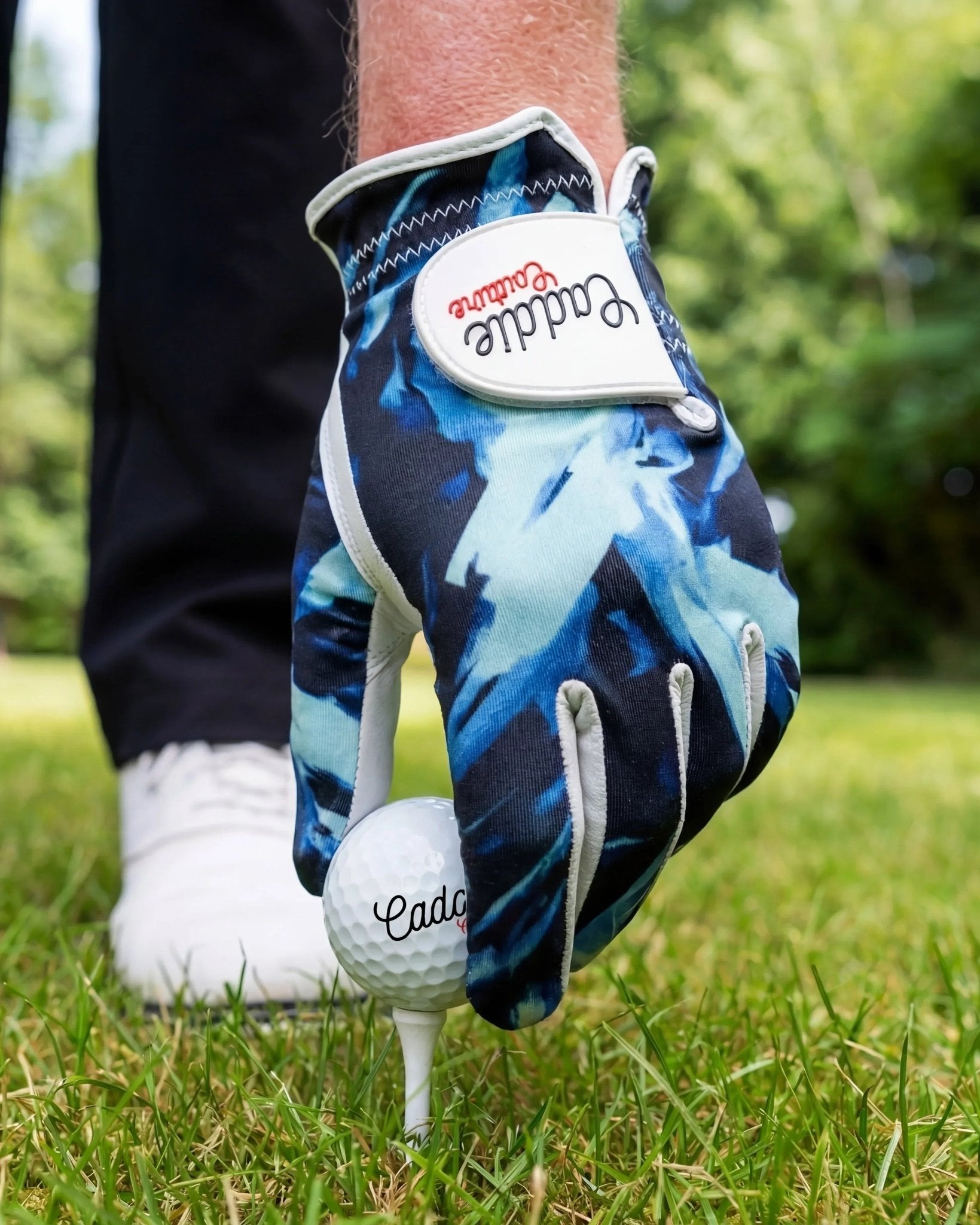
For golfers who want a wardrobe that feels current rather than stuck in the past, this is where brands like Caddie Couture hit the mark. Performance still leads, but style is not treated as an afterthought.
How to choose the right glove for your game
Start with your lead hand
Most right-handed golfers wear one glove on the left hand. Most left-handed golfers wear one on the right. Simple enough. The glove goes on the lead hand because that hand controls much of the club through impact. If you are buying your first proper glove, make sure you are shopping for the correct hand before worrying about anything else.
Pay attention to your playing conditions
If you mostly play in mild summer conditions, a soft leather glove may be exactly what you want. The feel is excellent, and that close contact with the club can be hard to beat. If you play through variable British weather, however, versatility becomes more important. Breathable inserts, reinforced high-wear zones and moisture-handling fabrics start to matter more.
A winter glove is a different conversation again. Some golfers keep a standard glove on all year and simply put up with cold fingers. Others switch to thermal or all-weather options as soon as the temperature drops. There is no single right answer, but pretending one glove can do every job brilliantly is usually optimistic.
Think about durability honestly
There is no point buying the softest premium glove on the shelf if you are playing three times a week and expecting it to last a full season. Equally, if feel is your priority and you only play occasionally, going too heavy on durability may leave you with a glove that never quite feels right.
A worn patch at the heel of the palm or the base of the thumb can also tell you something about your grip. Sometimes the issue is glove quality. Sometimes it is a sign you are holding the club too tightly. A better glove helps, but it does not fix poor hand pressure on its own.
Common mistakes men make when buying golf gloves
One of the biggest mistakes is buying too large. Plenty of golfers assume a little extra room will feel more comfortable. It rarely does. That spare material shifts during the swing and weakens the connection between your hands and the club.
Another mistake is using one glove until it is completely finished. Gloves absorb sweat, stretch with use and lose their shape over time. Rotating between two gloves can help them dry properly between rounds and often extends their life. It also saves you from that unpleasant moment on the first tee when you realise your only glove is already slick and tired.
Storage matters more than most players think. Stuffing a damp glove into the side pocket of your golf bag is a quick route to stiffness and wear. Let it air dry naturally and keep it flat where possible. Basic care will not make a glove immortal, but it does keep it playable for longer.
When all-weather gloves are the better call
Not just for rain
All-weather gloves are often marketed as rainy-day kit, but that sells them short. They can be a smart choice for humid rounds, range sessions and regular play when durability is as important as feel. They tend to hold shape better, dry faster and cope with changing conditions more calmly than pure leather.
The compromise is touch. Some players will always prefer the softer, more precise feel of premium leather. Others would rather have slightly less luxury and more consistency across a long stretch of rounds. If your golf calendar includes early starts, breezy afternoons and the occasional sideways shower, practicality starts looking quite stylish in its own right.
Better for practice
If you spend a lot of time on the range, save your favourite match-day glove for the course. Practice sessions create wear quickly, especially if you are hitting from mats. A durable all-weather glove can take that punishment without burning through your best option.
Style on the course is not separate from performance
Golf has moved on. Players want clothing and accessories that perform, yes, but they also want pieces that reflect their taste. That is not vanity. It is part of feeling comfortable in your own game. When your kit looks current and feels built for movement, you carry yourself differently.
A glove is a small detail, but small details shape the overall impression. Crisp design, strong fit and quality finish say something before you even make a swing. More importantly, they support the practical side of the game - grip security, comfort under pressure and fewer distractions over 18 holes.
The best golf gloves for men are the ones that balance these things properly. They do not force a choice between function and presence. They give you both.
So what should you look for before you buy?
Look for a close fit through the palm and fingers, enough breathability for the conditions you usually play in, and material that matches how often you are on the course. If you value feel above everything, lean towards premium leather and accept that replacement may come sooner. If you play often or through mixed weather, a well-made synthetic or hybrid glove may serve you better.
Then look at the design. Not as a gimmick, but as part of the package. A glove should work hard and look right with the rest of your gear. Clean lines, confident styling and quality construction are not extras. They are part of what makes a glove worth putting on.
Choose the one that makes your grip feel secure and your outfit feel finished. That is usually the glove you reach for again and again.